The Arkus Signal / Funding storiesOfficial calls, with the important details
Status: NewWashington State businesses

Share the work before sharing the grant.

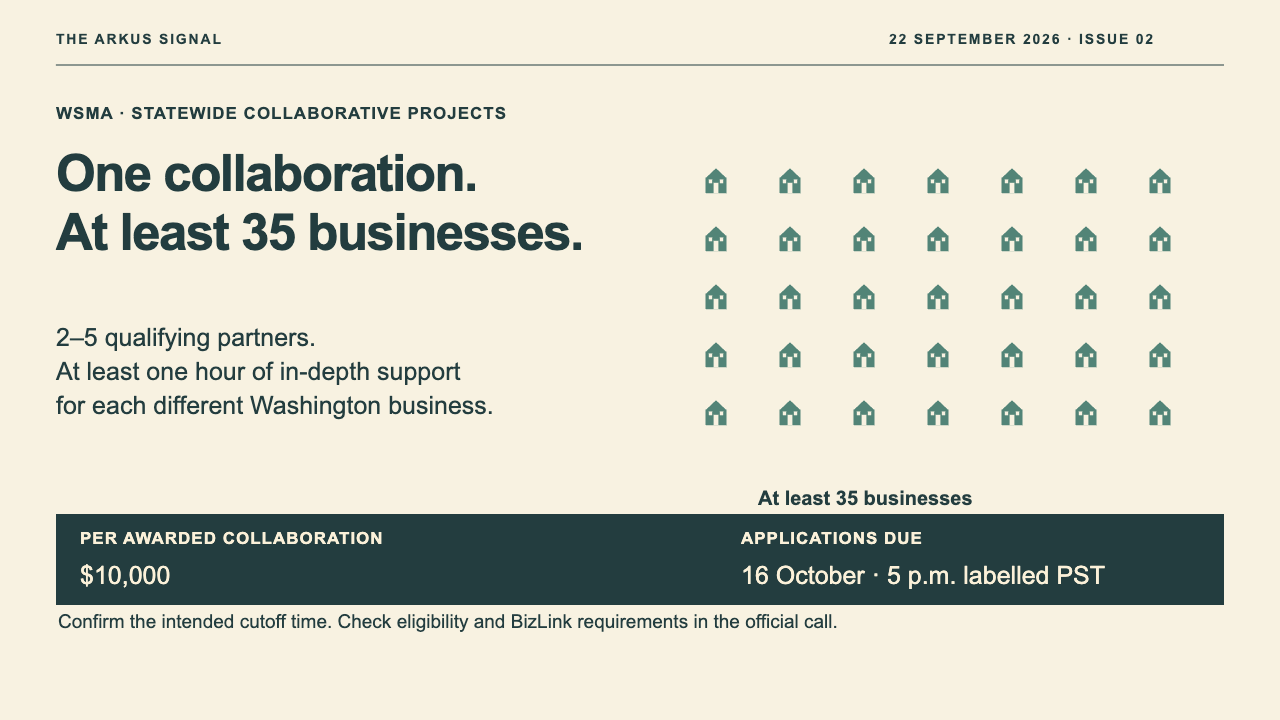
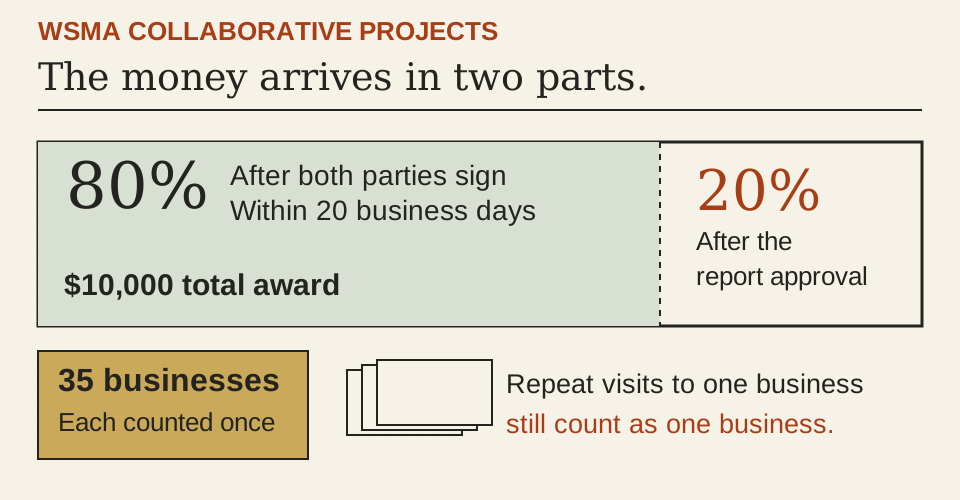
A $10,000 collaboration must reach at least 35 different Washington businesses. Repeat visits still count as one business.

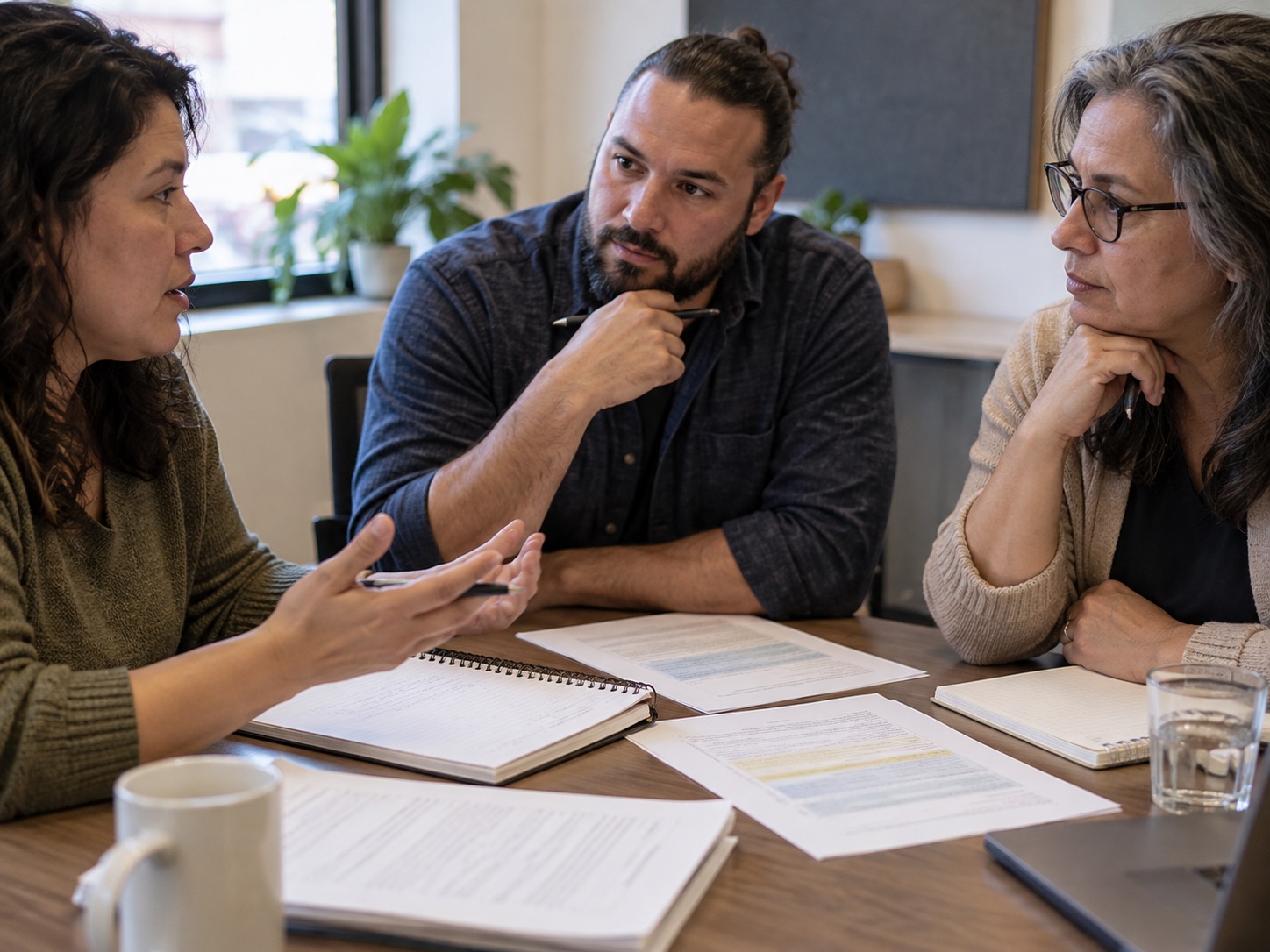
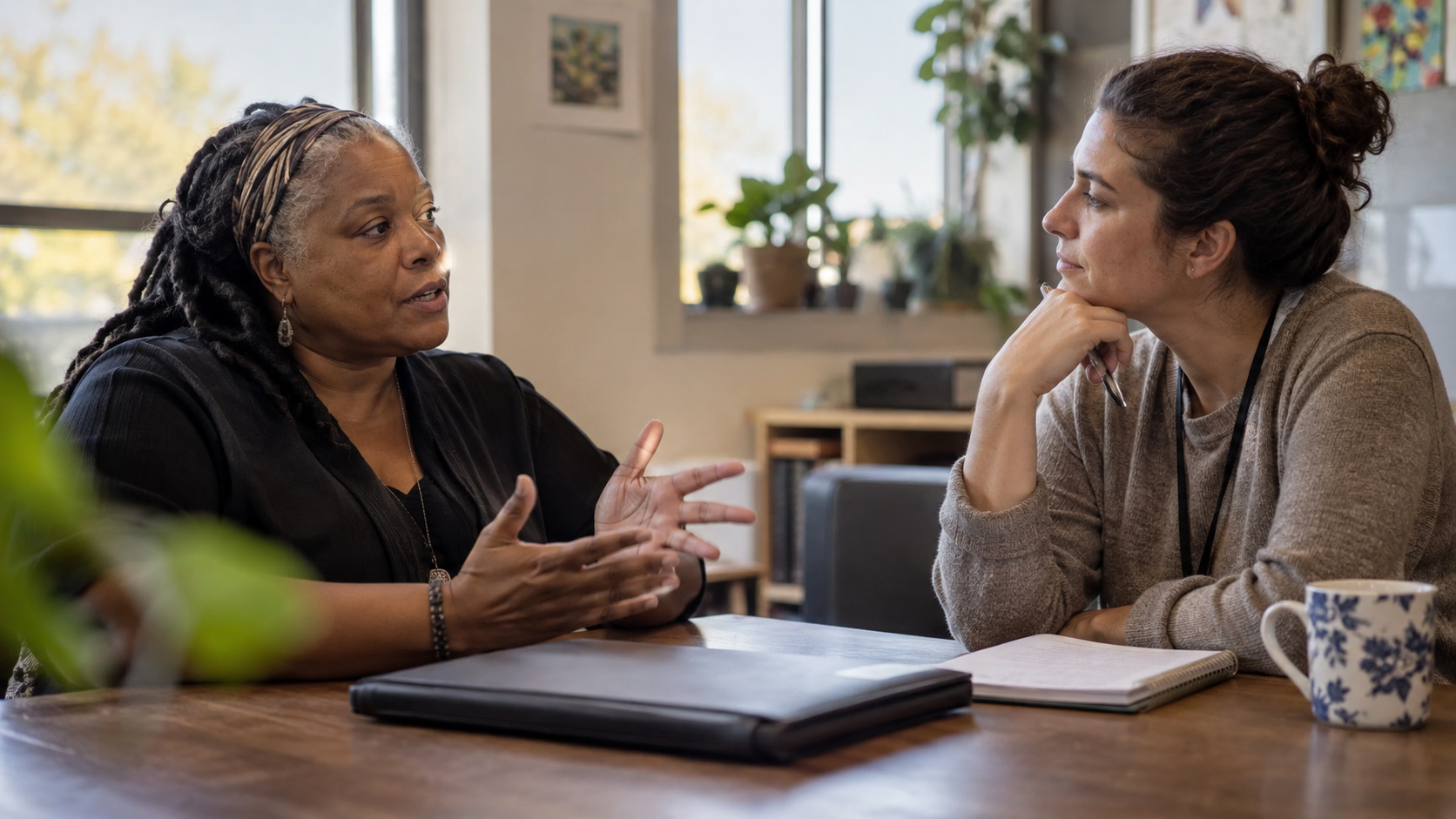
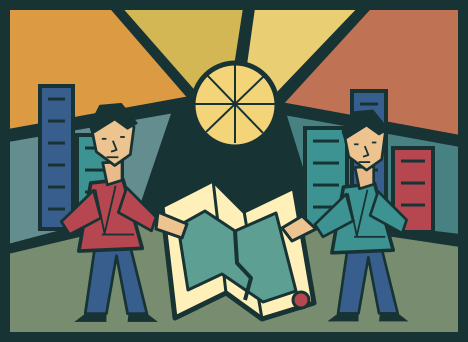
Fictional small business support team plans a collaborative grant project in a contemporary community workroom.

Thirty-five businesses means thirty-five businesses. An owner who attends three workshops still counts once. WSMA’s new collaborative grant makes that distinction explicit, asking business-support organizations to work together and reach people they might not reach alone. Each business must receive at least one hour of substantial support to count.

The program plans 15 awards of exactly $10,000. Projects must engage two to five strategic partners, with an eligible lead managing the money and reporting. Every partner must qualify. The current rules consider several nonprofit and quasi-governmental forms, including chambers and trade associations, rather than limiting the collaboration to charities.

Check the budget before arranging the planning meeting: the request cannot exceed 20% of the lead’s qualifying actual budget. Funding supports services, not new software, equipment or cash handed to business owners. Applications close October 16. Optional sessions on September 22 and 23 explain the program and portal; find session details in the online story; required dates are on page 09. A saved draft can be revised. A submitted application cannot.

Add a calendar reminder

Optional information session · 22 September 2026 · 1 p.m. (time zone: see note)

Optional session. The guidelines label this time PST during daylight-saving time; confirm the intended Pacific time. Use the direct registration link; no attendance is booked automatically.

Optional portal walkthrough · 23 September 2026 · 1 p.m. (time zone: see note)

Optional walkthrough. The guidelines label this time PST during daylight-saving time; confirm the intended Pacific time. Use the direct registration link; no attendance is booked automatically.

Application deadline · 16 October 2026 · 5 p.m. (time zone: see note)

Required full application. The issuer says 5 p.m. PST during daylight-saving time. All-day reminder; confirm the intended Pacific cutoff.

Expected award decision · 20 November 2026

WSMA expects decisions on or before this date; this is not an applicant submission deadline.

Recipient work and report deadline · 16 June 2027

For selected recipients: all project work, spending and the final report must be complete.

Opens an editable draft or downloads an import. Nothing is saved automatically.

Washington State Microenterprise Association · Official information checked 21 September 2026.Official source: signal.arkusinnovationstudios.com/r/02/f01

Fictional small business support team plans a collaborative grant project in a contemporary community workroom.
Who can apply

Lead and partners need qualifying nonprofit or quasi-governmental status, at least two years of relevant business-support experience, and an Evergreen BizLink resource-partner profile or submitted profile. Academic institutions cannot be funded applicants.

Before you begin

Engage 2–5 strategic partners; reach at least 35 different Washington businesses. The $10,000 request cannot exceed 20% of the lead’s qualifying actual budget, or its dedicated business-services budget inside a larger organization. Upload the required budget in Excel format, including lead-organization personnel and collaborating partners. The target microbusinesses have five or fewer employees and need less than $50,000 in financing.

Read this detail

The issuer uses PST during daylight-saving time; confirm the intended Pacific cutoff. Calendar reminders remain all-day. Instructions ask for the 'last full 2026 calendar year' budget before that year has ended. Confirm the intended period; do not substitute a year silently. The guidelines call June 16, 2027 a Friday; that date is a Wednesday. Confirm the final reporting date. Use the 2026–27 guidelines: the separate website FAQ still describes the previous cycle.
Status: NewUnited States

Keep the work going all year.

A new federal call offers up to $750,000 for sustained youth drug prevention, with schools, families and community partners working together.

Fictional teens and mentors take part in art and movement activities in a community recreation room.

A school assembly can start a conversation. Keeping that conversation useful takes people who will still be there next month. This new federal grant supports drug prevention in schools and extracurricular settings, combining education, early intervention, mentoring and routes into treatment.

The work must connect local law enforcement and community coalitions. Applicants can develop support for parents and caregivers, train school staff or improve safe travel to school and activities. The point is a coordinated program for young people, with a clear explanation of who does what and how progress will be measured.

Up to $750,000 is available over three years. There are two submissions: the federal application form by October 29, then the full package in JustGrants by November 5. The proposal uses a questionnaire with short answers. A concise application still needs a complete plan.

Add a calendar reminder

Latest advised SAM registration start · 15 October 2026

The notice says to begin SAM registration or renewal by September 29, and no later than this date. This is an early registration instruction, not the proposal deadline and does not mean registration must be complete on this date.

Grants.gov first-stage deadline · 29 October 2026 · 11:59 p.m. ET

Required SF-424 submission. The later JustGrants deadline does not replace this first stage.

JustGrants full application · 5 November 2026 · 8:59 p.m. ET

Required full application, including the proposal questionnaire and budget.

Opens an editable draft or downloads an import. Nothing is saved automatically.

Office of Juvenile Justice and Delinquency Prevention, US Department of Justice · Official information checked 21 September 2026.Official source: signal.arkusinnovationstudios.com/r/02/f02

Fictional teens and mentors take part in art and movement activities in a community recreation room.
Who can apply

State, county and city governments; federally recognized Tribal governments; and nonprofits with or without 501(c)(3) status, excluding institutions of higher education. No matching contribution is required.

Before you begin

Coordinate with local law enforcement and community coalitions. Begin SAM registration or renewal by September 29, and no later than October 15, as the notice instructs. Submit SF-424 in Grants.gov before the JustGrants application. One lead applies; other funded partners are subrecipients. Complete the required proposal questionnaire and budget.

The Arkus Signal / Funding storiesOfficial calls, with the important details
Status: NewUnited StatesCloses within 14 days

The referral needs somewhere to go.

One award of up to $2 million will help substance-use programs solve the practical problems between police, treatment providers and correctional facilities.

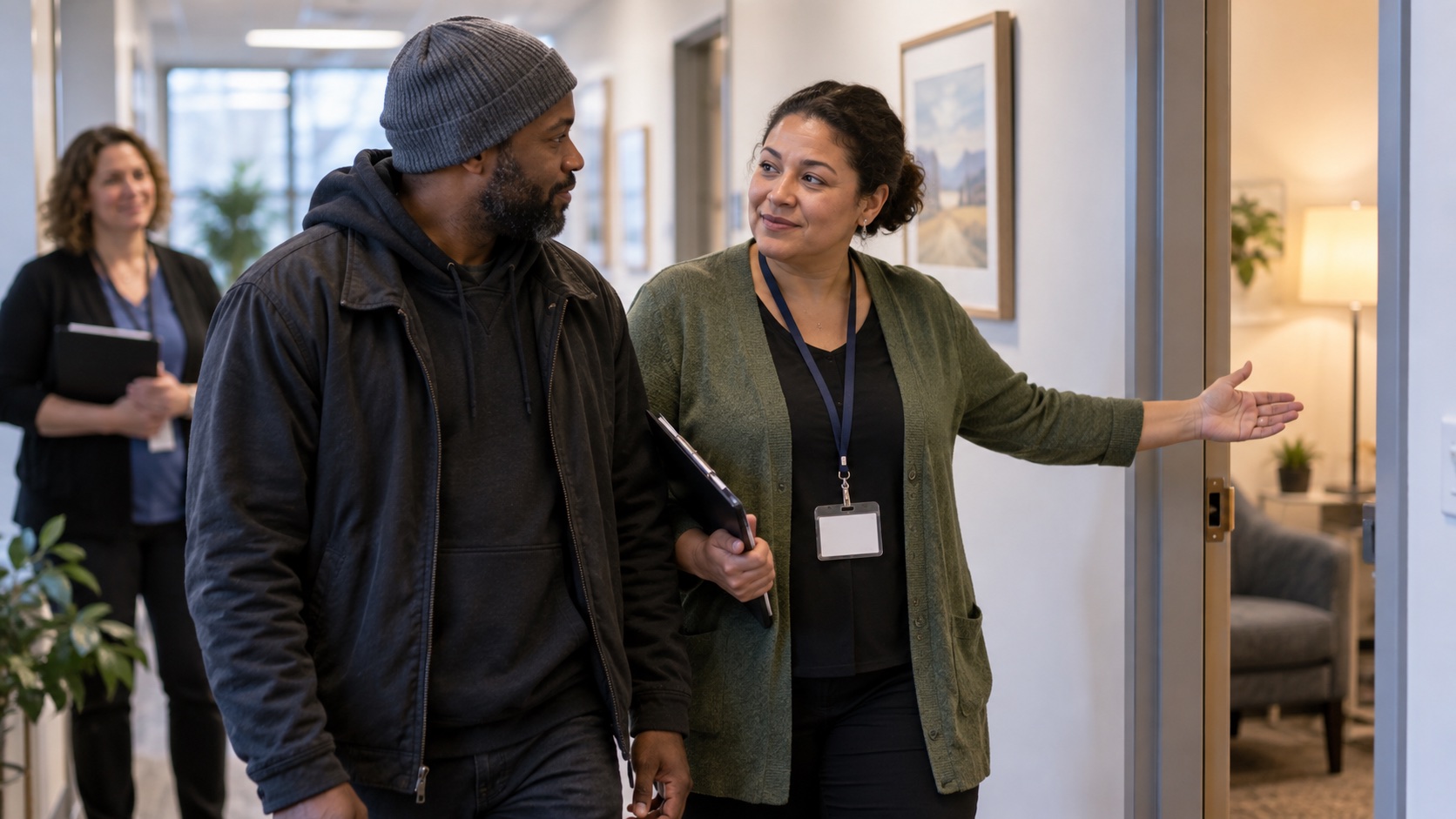
Fictional care coordinator guides an adult toward a consultation room during a respectful referral handoff.

A referral is easy to write. Finding an available treatment bed after hours is a different task. This new BJA award asks an experienced organization to help funded substance-use programs deal with those practical gaps, from safe field encounters to continuity of care after release.

The work spans four areas: police operations, coordination inside correctional facilities, lawful information sharing and useful performance data. Training might explain a release-planning procedure or help agencies agree what treatment information they can share. It needs people who understand both the work and its privacy limits.

BJA expects one cooperative agreement of up to $2 million over two years. The applicant can be a nonprofit, university or business, but must show it can support other grantees with specialist advice. The first federal form is due November 2; the full application follows November 9. The ten-page narrative leaves little room for vague promises.

Add a calendar reminder

Latest advised SAM registration start · 30 September 2026

The notice advised starting SAM registration by 21 September (passed); its latest stated date is 30 September. This is an early registration instruction, not the proposal deadline and does not mean registration must be complete on this date.

Grants.gov first-stage deadline · 2 November 2026 · 11:59 p.m. ET

Required SF-424 submission before the full application.

JustGrants full application · 9 November 2026 · 8:59 p.m. ET

Required full application, including ten-page maximum narrative and budget.

Opens an editable draft or downloads an import. Nothing is saved automatically.

Bureau of Justice Assistance, US Department of Justice · Official information checked 21 September 2026.Official source: signal.arkusinnovationstudios.com/r/02/f03

Fictional care coordinator guides an adult toward a consultation room during a respectful referral handoff.
Who can apply

Public or private institutions of higher education, nonprofits with or without 501(c)(3) status, and businesses including small businesses. No matching contribution is required.

Before you begin

The notice advised starting SAM registration by 21 September (passed); its latest stated date is 30 September. Submit SF-424 in Grants.gov, then the full application and a narrative of no more than ten pages in JustGrants. One application per lead; funded partners are subrecipients. Review the notice’s program exclusions and award conditions.

Status: NewUnited StatesCloses within 14 days

Coming home is a process.

Up to $1 million supports mentoring and practical help for adults leaving correctional facilities. A partnership with a correctional agency is required.

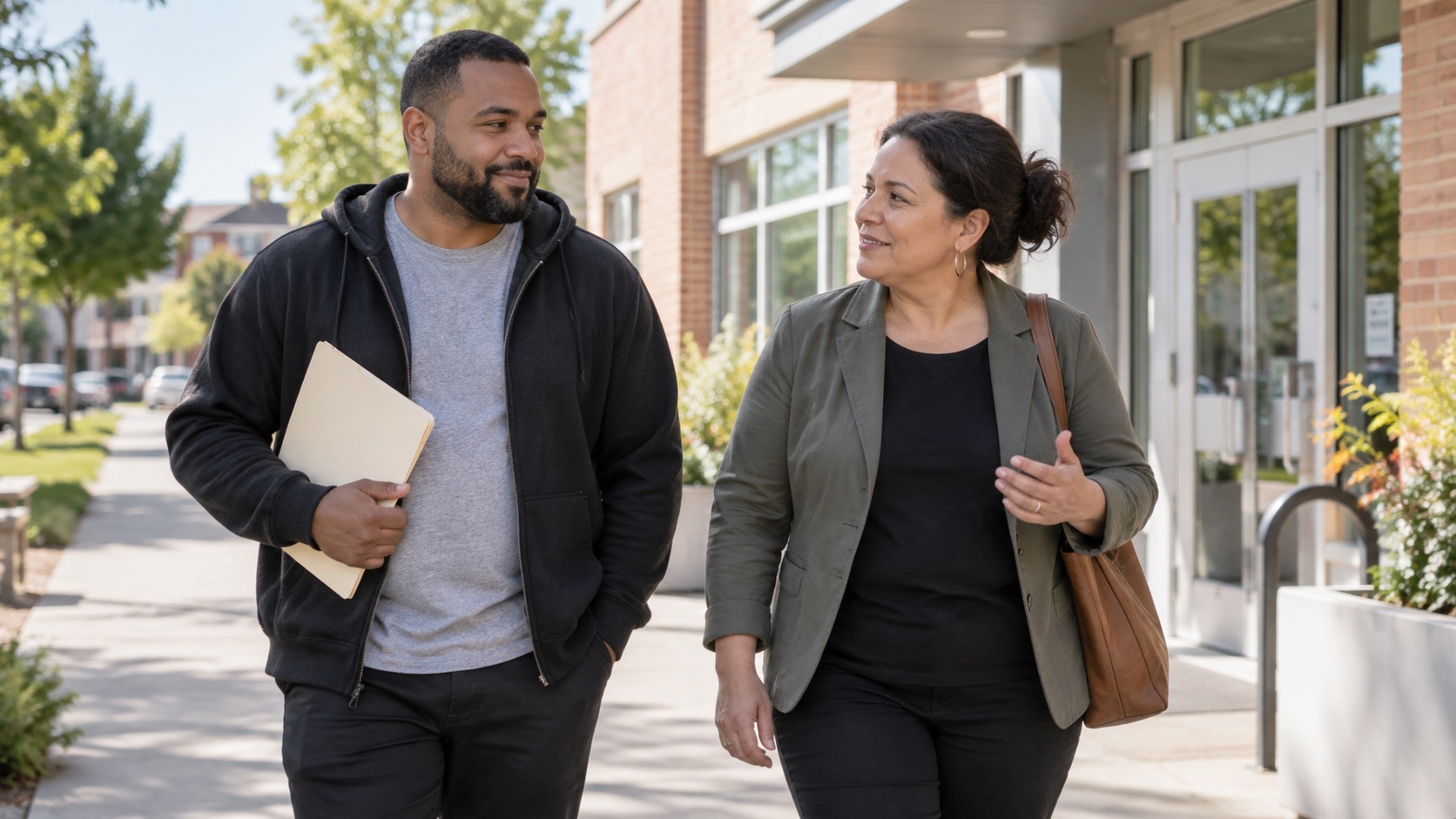
Fictional adult and mentor walk outside a neighborhood service center with a planning folder.

The release date is one day. Rebuilding a life takes longer. This federal call funds mentoring and transitional services for adults returning from correctional facilities who are assessed as facing a moderate to high risk of reoffending. Support can begin before release and continue afterward.

The grant is designed for community organizations and Tribal governments with a working relationship to the facilities serving their participants. A signed agreement with the correctional agency is required. Applicants also need a serious plan for tracking outcomes, including a chief executive’s assurance that the organization will collect the required data.

BJA anticipates 13 awards of up to $1 million, each covering three years. The federal form is due October 30, followed by the full JustGrants application on November 6. Start with the partnership and the service plan. A polished ten-page narrative cannot supply either after the deadline.

Add a calendar reminder

Latest advised SAM registration start · 30 September 2026

The notice advised starting SAM registration by 21 September (passed); its latest stated date is 30 September. This is an early registration instruction, not the proposal deadline and does not mean registration must be complete on this date.

Grants.gov first-stage deadline · 30 October 2026 · 11:59 p.m. ET

Required SF-424 submission; this is the first stage, not the full-application deadline.

JustGrants full application · 6 November 2026 · 8:59 p.m. ET

Full application with required correctional-agency memorandum and chief executive assurance.

Opens an editable draft or downloads an import. Nothing is saved automatically.

Bureau of Justice Assistance, US Department of Justice · Official information checked 21 September 2026.Official source: signal.arkusinnovationstudios.com/r/02/f04

Fictional adult and mentor walk outside a neighborhood service center with a planning folder.
Who can apply

Federally recognized Tribal governments and nonprofits with or without 501(c)(3) status, excluding institutions of higher education. No matching contribution is required. More than one application is permitted for genuinely different projects.

Before you begin

A memorandum of understanding with the correctional agency serving the target facilities is required, along with the chief executive’s assurance on participant identifiers and reoffending-outcome reporting. The notice advised starting SAM registration by 21 September (passed); its latest stated date is 30 September. Submit SF-424 first; full application includes a ten-page maximum narrative. Funded partners are subrecipients.

The Arkus Signal / Funding storiesOfficial calls, with the important details
Status: NewUnited States; research with eligible Native populations

Before the trial, test the plan.

NIH’s planning grant asks researchers and Native communities to work out whether a future health study can succeed.

Fictional researchers plan an early health study without depicting a named Tribal organization or actual program participants.

A study can have a sound scientific question and still ask people to take part in a way that makes little sense to them. This NIH grant funds the work of finding that out early. Researchers can develop an intervention, test whether recruitment is practical and adapt methods with Native communities before a larger trial.

Community involvement is part of the research design, with partners helping shape the work and its use. The R34 route supports planning and feasibility, not a trial intended to establish whether a treatment works. Applicants do not need preliminary data. They do need a plan of no more than two pages showing milestones and the decisions those milestones will support.

Up to $450,000 in direct research costs is available across three years, with no year above $225,000. The next deadline is October 21 at 5 p.m. in the applicant organization’s local time. Institutional registrations can take weeks. A promising research question does not shorten the registration queue.

Add a calendar reminder

Application deadline · 21 October 2026 · 5 p.m. (time zone: see note)

The deadline follows the applicant organization’s local time. This publication cannot assign one universal time zone, so the reminder is all-day. Use NIH ASSIST or another submission route listed in the call.

Opens an editable draft or downloads an import. Nothing is saved automatically.

National Institutes of Health · Official information checked 21 September 2026.Official source: signal.arkusinnovationstudios.com/r/02/f05

Fictional researchers plan an early health study without depicting a named Tribal organization or actual program participants.
Who can apply

Eligible US universities, nonprofits, businesses, governments and Tribal organizations may apply. The research must fit a participating NIH institute and the call’s defined Native populations. Foreign organizations and foreign components are ineligible.

Before you begin

Complete SAM, Grants.gov and eRA Commons registrations. Include a Milestone and Study Target Plan of no more than two pages. Academic/research support letters are due with the application. Tribal/community resolutions and qualifying community letters may arrive up to 30 days before the review meeting; check its posted date and late-material rules.

Status: NewUnited States

The discovery may already be in the data.

NSF will fund work that makes existing scientific datasets more useful. Collecting a new dataset is outside this call.

Fictional researchers discuss data stewardship in a university workroom.

A dataset can be public and still be almost impossible to use. Missing definitions, uncertain permissions or incompatible formats can stop a researcher long before the interesting question. NSF’s AI Datasets program backs work that removes those obstacles from existing scientific data and opens up research that was previously difficult.

There are three routes: planning proposals up to $200,000, impact projects up to $2 million and flagship projects up to $5 million. Impact and flagship awards can last three years. The larger labels are not decorations. Applicants must explain the scientific benefit, the people who will use the resource and how it will remain accessible and reliable.

New primary data collection is outside scope. A partnership submits through one lead, with the other organizations included under that proposal. No preliminary proposal or letter of intent is required. Full applications close November 4 at 5 p.m. in the submitting organization’s local time. The persuasive question is what this work will let someone discover.

Add a calendar reminder

Full proposal deadline · 4 November 2026 · 5 p.m. (time zone: see note)

The deadline follows the submitting organization’s local time. All-day reminder; use the organization’s own time zone for the actual cutoff.

Opens an editable draft or downloads an import. Nothing is saved automatically.

National Science Foundation · Official information checked 21 September 2026.Official source: signal.arkusinnovationstudios.com/r/02/f06

Fictional researchers discuss data stewardship in a university workroom.
Who can apply

Eligible US higher-education institutions; research or education nonprofits; businesses with strong scientific or engineering research or education capability; state and local governments; federally recognized Tribal Nations; certain federal institutions under NSF rules.

Before you begin

Use an existing dataset and one lead submission. Explain scientific benefit, research plan, data governance and long-term availability. Flagship applicants must justify that scale; discussing the idea with a program officer is strongly encouraged.

The Arkus Signal / Funding storiesOfficial calls, with the important details
Status: NewUnited States and territories; national workCloses within 14 days

A contact list cannot do this job.

One national coordinator could receive up to $2 million to help health-professions leaders learn and act together.

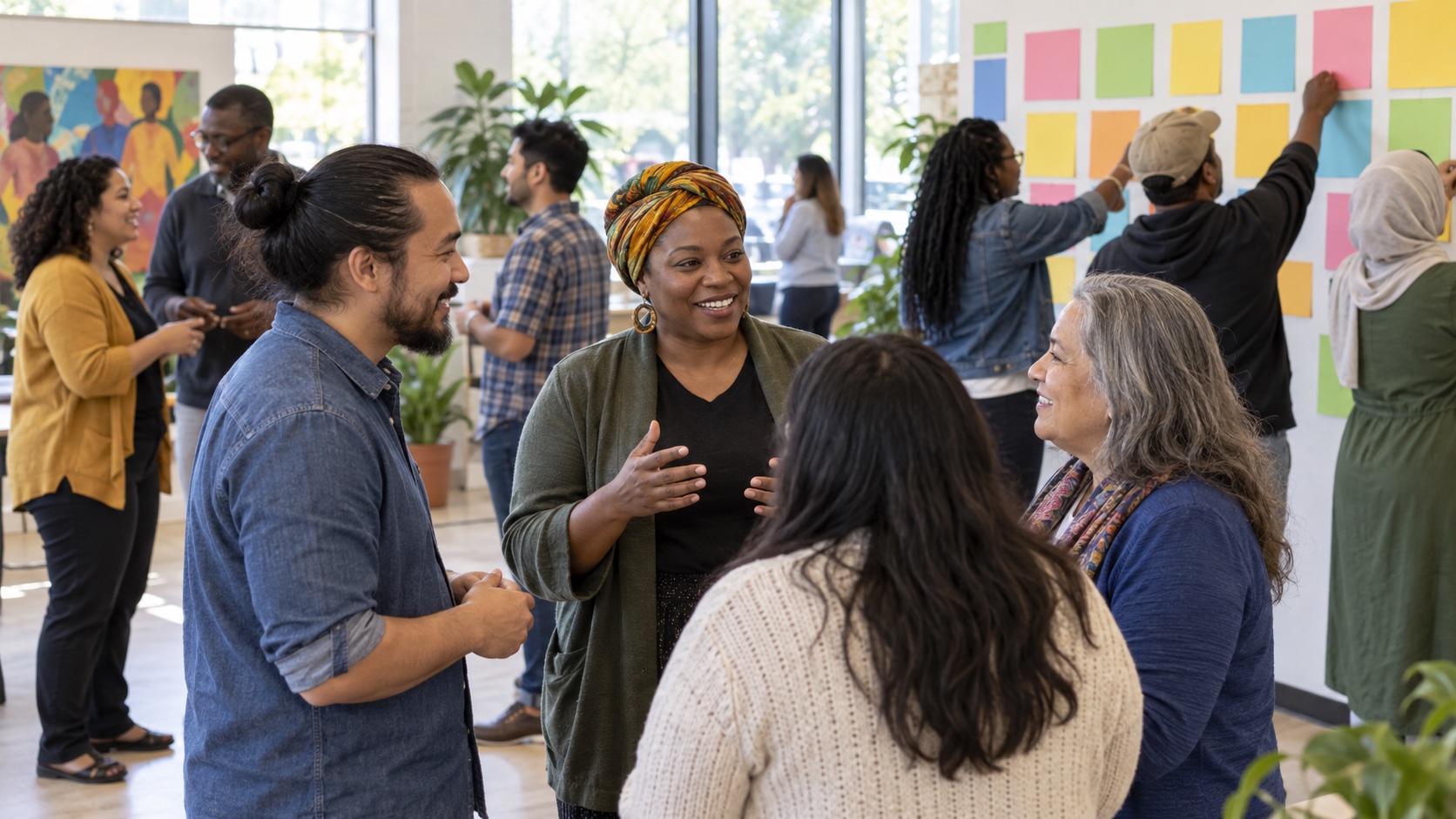
Fictional community health organizers talk and work at an active workshop.

A network is easy to draw: circles, connecting lines, perhaps a tasteful legend. Making it work requires someone to notice where the lines stop. RWJF seeks a lead organization that can help people across health-professions education and healthcare institutions coordinate their work on diversity, equity, inclusion and belonging.

The task reaches beyond introducing people. It includes building trust, sharing useful learning and helping organizations act together. Applicants need national reach and the ability to manage a large grant involving several partners. A group can apply, but one organization must hold the grant and take responsibility for coordination and reporting.

One award of up to $2 million is expected for twenty-four months. The first deadline is September 24 at 3 p.m. Eastern for a letter of intent, the initial description of the proposed work. Full proposals follow only by invitation. With that date close, the immediate question is who already has the relationships and authority to do the coordinating.

Add a calendar reminder

Letter of intent deadline · 24 September 2026 · 3 p.m. ET

Required first submission. Only invited applicants may submit a full proposal.

Invitation decision · 6 November 2026

Applicants are told whether they may submit a full proposal.

Invited full proposal deadline · 22 January 2027 · 3 p.m. ET

Only for applicants invited following the letter of intent.

Opens an editable draft or downloads an import. Nothing is saved automatically.

Robert Wood Johnson Foundation · Official information checked 21 September 2026.Official source: signal.arkusinnovationstudios.com/r/02/f07

Fictional community health organizers talk and work at an active workshop.
Who can apply

Public entities and eligible 501(c)(3) nonprofits based in the United States or its territories. Private foundations and non-functionally integrated Type III supporting organizations are excluded.

Before you begin

Apply through one lead, even for a partnership. Demonstrate national reach and the ability to manage a large grant across partners. A letter of intent is required before an invited full proposal.

Status: NewKing County, WashingtonCloses within 14 days

Give the people who help families time to learn.

King County offers $2,000–$20,000 in reimbursement for staff training that strengthens relationships between caregivers and young children.

Fictional adults participate in a family support training session.

Good training needs time on the work calendar. King County’s Promoting First Relationships program asks agencies to make that time real, allowing staff to learn and practice an approach that supports caregivers and children from birth to five. It is meant for people already working with families, not a future hire.

There are two routes: become a certified provider, or train colleagues after completing the provider level. Staff need at least two years of relevant direct experience, with half their current role devoted to continuing work with families. Each participant recruits a family for the practice sessions; the agency supplies time, equipment and support.

Applications close October 1. Creating the required Agiloft account can take three to five business days, so that is the immediate job. Funding reimburses eligible costs during 2027. Staff and supervisors also need to check the required January workshop and the training schedule before committing.

Add a calendar reminder

Application deadline · 1 October 2026 · 2 p.m. (time zone: see note)

Issuer labels the cutoff PST during daylight-saving time. Confirm the intended Pacific cutoff; apply through the dedicated Agiloft route. Account creation takes 3–5 business days.

Possible final addendum · 23 September 2026

The RFA schedules a final addendum only if needed. Check the official opportunity for changes before submitting.

Opens an editable draft or downloads an import. Nothing is saved automatically.

Public Health – Seattle & King County, Best Starts for Kids · Official information checked 21 September 2026.Official source: signal.arkusinnovationstudios.com/r/02/f08

Fictional adults participate in a family support training session.
Who can apply

King County community-based agencies; the scoring criteria specify nonprofit human-service agencies. Staff must already work for the applicant, have at least two years of relevant experience with children aged birth to five and families, and spend at least 50% of their role in ongoing direct service.

Before you begin

Create a DCHS Agiloft account, allowing 3–5 business days. Submit the signed cover sheet, a letter of interest of no more than four pages and personnel budget. Identify each staff member’s training route; Level 3 requires completed Level 2 and the required assessment. Account for family recruitment, equipment, workshop attendance and staff release time.

Read this detail

The live page and current RFA direct applicants to Agiloft, but an older email-submission sentence remains in the RFA. Follow the dedicated Agiloft instructions and check any September 23 addendum. The page uses PST during daylight-saving time. The calendar reminder remains all-day until the intended Pacific cutoff is confirmed.

The Arkus Signal / Funding storiesOfficial calls, with the important details
Status: Still openEligibility and geography belowCloses within 14 days

Make the method cheaper, not just the shopping.

This sequencing challenge targets roughly $1–$10 per sample through laboratory innovation. Bulk discounts alone will not qualify.

Editorial image for Innovations in Low-Cost and Simplified Pathogen Sequencing Workflows

A cheaper box of laboratory supplies is useful. This challenge is asking for a deeper change: fewer difficult steps between a patient or environmental sample and usable genetic sequencing data. The aim is a credible path toward roughly $1–$10 per sample for routine public-health work in low- and middle-income countries.

Applicants need a sequencing method that works with existing equipment and keeps the data useful. The funders favor simpler procedures, adaptable components and realistic performance in laboratories with limited infrastructure. Buying in bulk or putting more samples through the same process cannot be the main innovation. The cost target is an ambition to test, not a claim applicants must already have achieved.

Three award levels reach $300,000, $600,000 and $800,000, according to the work’s maturity. September 29 at 11:30 a.m. Pacific is the application cutoff. The initial package is three proposal pages plus one budget page. Use that small space to explain the scientific change, the evidence needed and the conditions in which it will work.

Add a calendar reminder

Application deadline · 29 September 2026 · 11:30 a.m. PT

Submit the three-page proposal and one-page budget through the official portal.

Opens an editable draft or downloads an import. Nothing is saved automatically.

Grand Challenges, co-funded by Gates Foundation and Temasek Foundation; managed by United Nations Foundation · Official information checked 21 September 2026.Official source: signal.arkusinnovationstudios.com/r/02/f09

Who can apply

Eligible research institutes, nonprofits, companies, international organizations, government agencies and academic institutions worldwide. Individuals and entities treated as individuals for US tax purposes are excluded. Sanctions and specified industry exclusions apply.

Before you begin

Submit no more than three proposal pages, including figures and references, plus one budget page. Show a laboratory testing plan, an 18-month workplan and evidence planned within the first 12 months. Accept the funders’ requirements for making results and products accessible to intended beneficiaries. Do not include proprietary information.

Status: NewEligibility and geography belowCloses within 14 days

Make room for the audience that is missing.

Up to $5,000 can support an arts organization or a particular project in three named North Central Washington counties.

Editorial image for Woods Family Music and Arts Grant

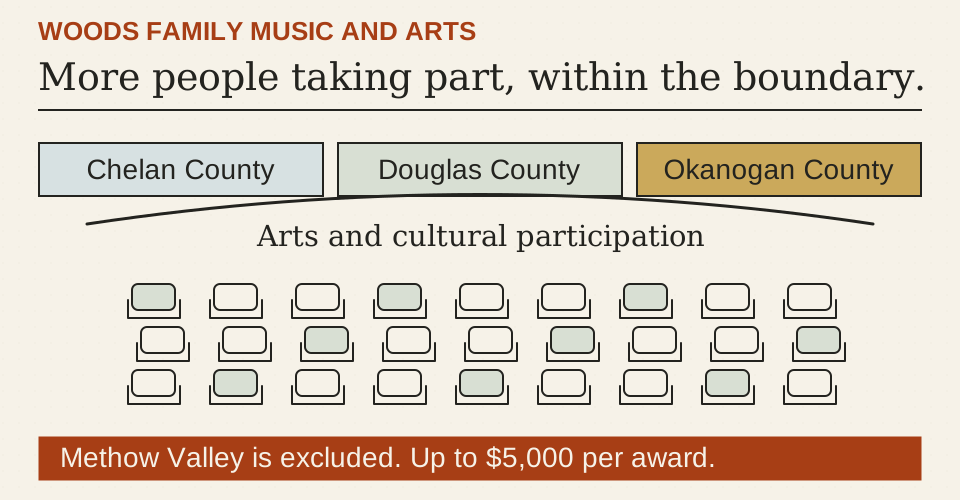
The audience is part of the artistic problem. Who cannot get to the performance, see their heritage represented or find an affordable way to take part? The Woods Family Music and Arts Grant supports broader participation, with particular attention to young people and audiences that existing programs do not reach.

Applicants may seek up to $5,000 for general operating costs or a specific project. The geographic boundary matters: the eligibility page names Chelan, Douglas and Okanogan counties and excludes the Methow Valley. Eligible charities, schools and certain other public or religious organizations can apply. Other groups need a fiscal sponsor, an eligible charity that takes responsibility for the grant.

Applications close September 30, with awards expected in November. The fund will not pay for a project already completed or equipment already acquired before the award date. Plan something the grant can still change. Recipients have one year after the award to spend the money and must report what happened.

Add a calendar reminder

Application deadline · 30 September 2026

Annual September 30 deadline confirmed against the current application materials. No cutoff time is published.

Opens an editable draft or downloads an import. Nothing is saved automatically.

Community Foundation of North Central Washington · Official information checked 21 September 2026.Official source: signal.arkusinnovationstudios.com/r/02/f10

Who can apply

Eligible 501(c)(3) nonprofits in Chelan, Douglas and Okanogan counties, excluding the Methow Valley; government entities including schools and qualifying religious organizations. Other groups require a 501(c)(3) fiscal sponsor.

Before you begin

One application per organization, except sponsorship of another applicant. Schools may submit one per building plus one district-wide request. Do not seek support for work completed or equipment acquired before the award.

Read this detail

The sample application includes a Grant County service-area option, but the eligibility page names only Chelan, Douglas and Okanogan and excludes Methow Valley. Do not treat that option as an eligibility extension; confirm any boundary case with the foundation.

The Arkus Signal / Funding storiesOfficial calls, with the important details
Status: Still openEligibility and geography belowCloses within 14 days

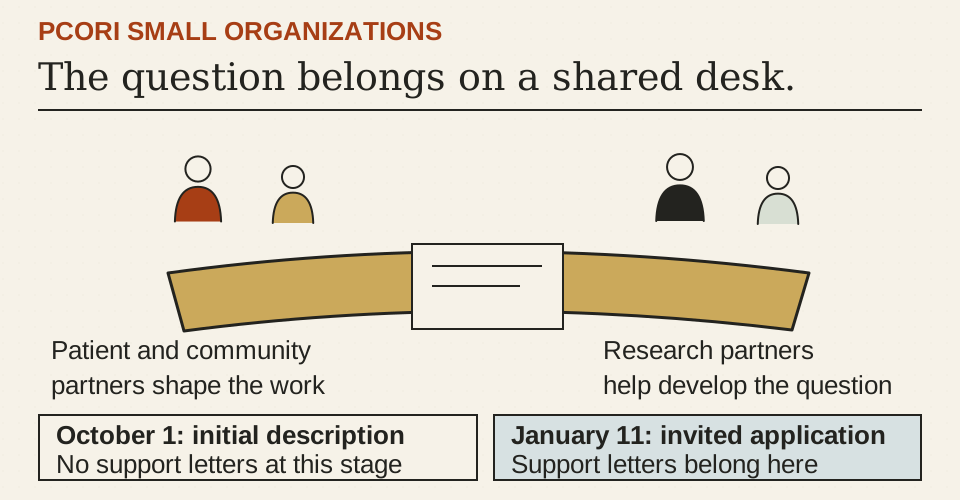
Let patients help write the question.

PCORI offers up to $300,000 to help small organizations become research partners. The grant does not pay for a research study.

Editorial image for Engagement Award: Building Capacity for Small Organizations To Engage in Patient-Centered Comparative Clinical Effectiveness Research, Fall 2026

A patient can answer every survey question and still have no say in what a study asks. PCORI wants small organizations to help change that relationship. This award funds the skills and partnerships needed to take part in future research comparing healthcare options, with patients helping decide what matters.

Small has a precise meaning here: an average annual operating budget no higher than $1.5 million over the past two fiscal years. Previous direct Engagement Award funding must total no more than $125,000; money received as a subcontractor does not count. Nonprofits, businesses and eligible public organizations can apply, but existing relationships with researchers and patient communities are required.

The October 1 deadline is for a letter of intent, an initial project description. Support letters belong with the later invited application. Awards cover two years and include participation in PCORI’s learning network. Surveys alone will not satisfy the partnership requirement, and the money cannot fund a study or write the next grant application.

Add a calendar reminder

Letter of intent deadline · 1 October 2026 · 5 p.m. ET

Required initial submission in PCORI Connect. Support letters are submitted with the later invited application, not this first stage.

Invited application deadline · 11 January 2027 · 5 p.m. ET

Only after the letter of intent is accepted and PCORI invites an application. Invited applicants must attend at least one virtual meeting with program staff.

Opens an editable draft or downloads an import. Nothing is saved automatically.

Patient-Centered Outcomes Research Institute · Official information checked 21 September 2026.Official source: signal.arkusinnovationstudios.com/r/02/f11

Who can apply

Qualifying nonprofit, for-profit and public organizations, or groups using an IRS-recognized fiscal sponsor. Average annual operating budget must be $1.5m or less over the past two fiscal years; prior direct Engagement Awards cannot total over $125,000. Individuals cannot apply. A foreign-led application must justify US benefit and include a key US-based organization and co-project lead as a funded partner.

Before you begin

Demonstrate current relationships with researchers and with patients or other people connected to the topic. The project lead and administrative official must be employees or board members of the recipient. Choose only one Engagement Award track this cycle. Invited applicants must attend at least one staff meeting and supply support letters.

Status: NewRural Washington StateCloses within 14 days

A rural gathering can begin on a screen.

ArtsWA welcomes online arts activities that reduce isolation, when an experienced community service partner helps shape them.

Editorial image for Cultivating Healthy Communities: Arts, Health, and Well-Being in Rural Communities, FY27

A gathering does not always need everyone in the same room. ArtsWA’s rural-community grant welcomes online activities that reduce loneliness, particularly among older adults, when a service provider with experience of the community helps build the project. The screen is a way in; the relationship still needs people who know their neighbors.

Projects must put arts, heritage or culture at the center and be open to the public. Eligible applicants include arts and social-impact charities, qualified sponsored groups, designated local arts agencies and Tribal governments. A social-impact charity needs a distinct project, rather than support for its regular program. Prior pilot recipients and agricultural communities receive priority.

Awards range from $3,000 to $5,000 and reimburse approved spending. That means the organization must be able to pay costs before claiming them back. Applications close October 6 at 5 p.m.; the page does not specify a time zone. The collaboration needs another organization or service provider, and a practical plan for making participation possible.

Add a calendar reminder

Application deadline · 6 October 2026 · 5 p.m. (time zone: see note)

The issuer specifies 5 p.m. without a time zone. All-day reminder; confirm the cutoff.

Expected award notification · 12 November 2026

Issuer says notification by this date. This is not an applicant submission deadline.

Spending and reimbursement deadline · 30 August 2027

For recipients: complete eligible project spending and submit the reimbursement form by this date.

Final report deadline · 30 September 2027

For recipients: submit the final report.

Opens an editable draft or downloads an import. Nothing is saved automatically.

ArtsWA, Washington State Arts Commission · Official information checked 21 September 2026.Official source: signal.arkusinnovationstudios.com/r/02/f12

Who can apply

Qualifying arts, heritage, culture or social-impact 501(c)(3) nonprofits; groups with a qualifying fiscal sponsor; eligible faith-based organizations for secular public projects; designated local arts agencies; Tribal governments. Individuals, businesses and schools cannot apply.

Before you begin

Work in rural Washington with at least one other organization or service provider and public access. Online activities must involve a provider experienced with the community. Supply required tax-status evidence, budgets and state/federal registration numbers; sponsored groups must also be registered Washington nonprofits or charities.

Read this detail

The current program page gives a 5 p.m. deadline without a time zone. All-day calendar reminder; confirm the actual cutoff with ArtsWA.

The Arkus Signal / Last lookPeople who turn questions into work

An editorial observation

Make the hidden work easier to see.

The difficult part of a collaboration often happens between organizations.

The difficult part of a collaboration often happens between organizations. Someone translates a request, catches a missing detail or makes sure two reasonable plans do not collide. An application gets stronger when that work has a name, an owner and a place in the budget. This is an editorial observation about planning, not an additional funder requirement.

A useful partnership makes this work visible before the application is submitted. Who can approve a change? Who keeps the records? Who speaks to a participant when two services hand responsibility to each other? These are planning questions, not reasons to make a proposal longer. A short, shared answer can reveal a gap that an impressive list of partners conceals. The budget then has something concrete to support.

A moving explanationThe process at a glance

Give good partners a working plan.

An editorial way to read a collaborative proposal. The official WSMA rules remain in the article.

Step 1 of threeName the shared job

Explain what the organizations will do together and why it needs more than one team.

Step 2 of threeIdentify the people served

Use the funder’s actual geography and eligibility rules to describe who the project will reach.

Step 3 of threeShow who owns the next step

Connect responsibilities, evidence and budget so the reader can follow the work.

Name the shared job: Explain what the organizations will do together and why it needs more than one team.

Identify the people served: Use the funder’s actual geography and eligibility rules to describe who the project will reach.

Show who owns the next step: Connect responsibilities, evidence and budget so the reader can follow the work.