An Arkus Innovation Studios publicationPeople & possibilities
The Arkus Signal
Grants and funding opportunities worth pursuing
FUNDING EDITION30 SEPTEMBER 2026ISSUE 03 / DIGITAL EDITION
Grants & research funding
Research begins with a plane ticket.
The revised SPRINT call opens a route for overseas collaborators, with an eligible São Paulo researcher at the center.
Two researchers examine a small sample at a sunlit laboratory bench. AI-generated illustration; not a photograph of this project.
Research partnerships begin with an eligible lead and a shared plan. FAPESP’s revised SPRINT call supports overseas collaboration through mobility, with a São Paulo investigator and one foreign institution at its center.
Inside: twelve funding stories, from patient involvement in research to staff training for work with young families. New youth reentry and practical business calls sit beside deadlines that are already close.
Follow the partnership
Two different starts for research.
Choose a call to see the first useful step.
FAPESP
Research mobility comes first.
An eligible FAPESP lead and one foreign institution start with mobility. SAGe registrations, foreign mission funding and underlying grant conditions are required.
Eligible organizations prepare patients and researchers for comparative clinical research. Involve partners from the start; the initial Letter of Intent precedes any invited full application.
Editorial illustration. SPRINT phase one funds mobility; later awards are conditional. PCORI requires an initial inquiry before any invited application. Confirm current eligibility.Explore the opportunities ↓
THE ARKUS SIGNAL / FUNDINGTHE OPPORTUNITIES / 02
REVISED / São Paulo, Brazil, with a foreign research institution partner
A research partnership can begin with a plane ticket.
1 min read ·
The revised SPRINT call opens a route for overseas collaborators, with an eligible São Paulo researcher at the center.
FAPESP · Chamada de Propostas SPRINT 2026, Edição 1
Two researchers examine a small sample at a sunlit laboratory bench. AI-generated illustration; not a photograph of this project.
An overseas collaboration can begin with the practical problem of getting researchers into the same laboratory. FAPESP’s revised SPRINT call pays for mobility, giving an eligible São Paulo principal investigator and one foreign institution a starting point. The research must fit one of seven mandatory strategic themes, and both responsible researchers need complete SAGe registrations.
Phase one offers up to US$12,500 equivalent for one year. Later phases can add US$12,500 and US$25,000, subject to approval, reciprocity and overseas cofunding; these are not an automatic US$50,000 award. The foreign side must evidence its mission funding. An underlying grant still under review needs approval before selection, with at least six months remaining at the proposed start.
Edition 1 closes on 26 October; no closing hour or time zone is published. Edition 2 follows on 22 February 2027. Prepare an exchange plan that explains what the visits make possible, who travels and how each institution contributes.
Before you start
Eligible FAPESP-supported São Paulo researchers with one foreign institution; qualifying grants under review require approval. Mandatory strategic-theme and remaining-term rules apply.
The finer details
Complete both SAGe registrations, evidence foreign mission funding and confirm the underlying grant and proposed start satisfy the call.
FIRST FEATURE / Projects relevant to U.S. patients and healthcare; qualifying foreign organizations may lead
Patients need a place in the research team.
1 min read ·
Up to US$300,000 can help communities and researchers learn to work together. The first submission is due tomorrow.
Patient-Centered Outcomes Research Institute · Engagement Award: Capacity Building, Fall 2026 Cycle
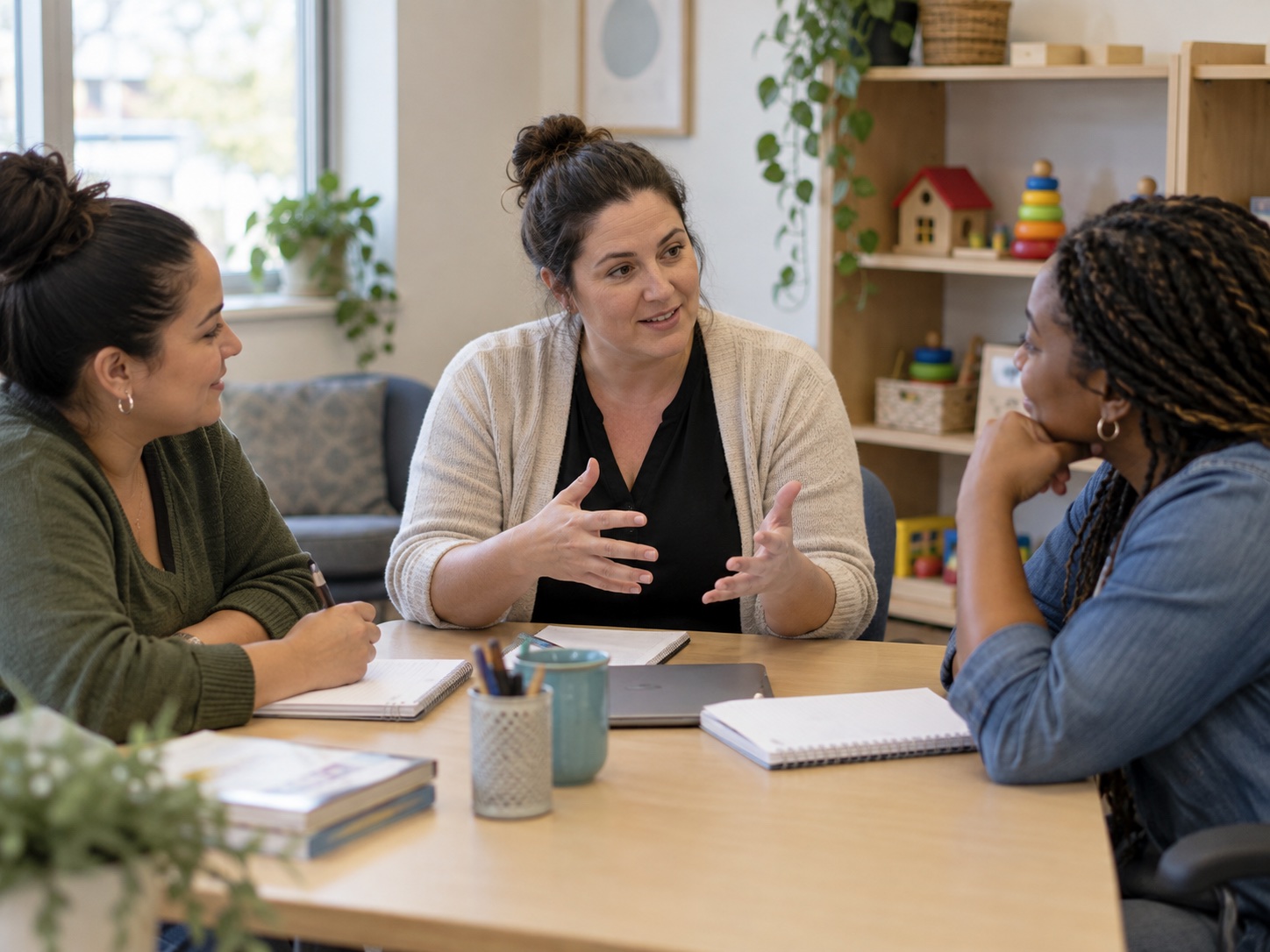
Two people discuss questions across a community meeting table. AI-generated illustration; not a photograph of this project.
A patient panel is easy to announce and harder to make useful. PCORI’s Capacity Building award supports the skills and relationships that let patients, caregivers and researchers shape future comparative clinical effectiveness studies together. It funds preparation for that research, not the study itself. A general health education program needs a genuine research connection.
Nonprofit and for-profit organizations may apply; individuals may not. U.S. applicants need an employer identification number. A foreign lead must justify U.S. healthcare benefit and include a key U.S. organization and co-lead as subcontractor. Partners must help develop the proposal; full applications need their support letters. The US$300,000 ceiling includes direct and indirect costs over at most two years.
The required initial Letter of Intent closes on 1 October at 5 p.m. Eastern. Only invited teams submit a full application by 11 January 2027, also at 5 p.m. Capacity Building permits distinct submissions with different project leads; the separate Small Organizations track has a cross-track restriction.
Before you start
Nonprofit or for-profit organizations, not individuals. Foreign leads need justified U.S. benefit and a key U.S. organization/co-lead as subcontractor.
The finer details
Required initial Letter of Intent through PCORI Connect; full application by invitation. Partners participate from proposal development; distinct submissions need different project leads.
STILL OPEN / King County, Washington, United States
The training grant comes with time in the diary.
1 min read ·
King County’s early-childhood call is still open, but staff availability and portal access matter as much as the budget.
Public Health – Seattle & King County · 2027 Promoting First Relationships Agency Training, RFA 2026CHS1082RFA
Three service professionals exchange ideas in a community learning room. AI-generated illustration; not a photograph of this project.
A training grant also puts time in the calendar. King County’s Promoting First Relationships support requires roughly 67 hours over 16 weeks. Agencies need staff cover while maintaining family services; US$2,000–US$20,000 supports training, not unrestricted operations.
Trainees must already be employed, have two years’ birth-to-five family-service experience and spend at least half their role on ongoing direct service. Intake-only or brief referral work does not qualify. Level 3 requires Level 2 preparation. Recording equipment and participating families matter too. Submit a signed cover sheet, project description and personnel budget; Agiloft accounts can take three to five business days.
The recorded close is 1 October at 2 p.m., but issuer PST wording needs clarification. Email and portal instructions differ, so confirm the current submission route. Interview dates also differ between packet sections; neither is an entry deadline. Earlier optional events have passed. Existing applicants should check access and the controlling instructions before polishing the last paragraph.
Before you start
King County nonprofit human-service agencies; employed trainees need two years’ relevant experience and at least 50% ongoing direct service. Level 3 requires Level 2.
The finer details
Confirm Agiloft access and controlling route; submit signed cover sheet, project description and personnel budget. Account creation can take three to five business days.
Issuer PST wording needs confirmation; do not silently convert it to PDT. RFA includes email language alongside current Agiloft submission instructions. Interview dates differ between packet sections; none is presented as an entry deadline.
NEW SELECTION / Global health and wellbeing; no geographic restriction stated
Build the fund that owns the problem.
1 min read ·
A short initial proposal can open a much larger conversation about funding and managing a global-health mission.
Coefficient Giving · Request for Proposals: Launchpad Funds
Four colleagues map a funding strategy around a wooden table. AI-generated illustration; not a photograph of this project.
A compelling proposal can still leave a problem without an owner. Coefficient Giving’s Launchpad Funds call looks for a fund or implementing organization able to take responsibility for a global-health or wellbeing mission. The case needs a funding strategy and decision-makers.
Individuals, new or existing fund teams, incubators and implementing organizations can enter; for-profit structures may be considered through due diligence. No geographic restriction is stated. Pre-seed support ranges from US$200,000 to US$10 million over up to 24 months; seed and scaling support runs from US$10 million to US$50 million or more over up to 36 months.
The expression of interest is due 2 October, without a published closing hour or time zone. Seed and scaling teams should identify a general manager; early teams can explain how they will recruit one. Future deployment of US$100 million or more is a fund ambition, not promised applicant funding. Begin with a compact proposal, team background and rough budget.
Before you start
Individuals, fund teams, incubators and implementing organizations; for-profit structures subject to due diligence. No geographic restriction stated.
The finer details
Submit an expression of interest. Seed/scaling teams identify a general manager; pre-seed teams may propose recruiting one.
UPDATED / Global, with some sponsor prizes restricted by location or subject
A working solution gets its opening.
1 min read ·
The 2027 economic-prosperity window is now open for teams tackling work, housing and financial resilience.
MIT Solve · 2027 Global Economic Prosperity Challenge
Two people test a service on a tablet at a neighborhood produce market. AI-generated illustration; not a photograph of this project.
A working response to unstable income, financial shocks or inadequate housing has a new window. MIT Solve’s 2027 Global Economic Prosperity Challenge opened on 22 September. The global call accepts technology broadly, including traditional knowledge and business models, but ordinary entries need a functioning prototype. Concept-stage proposals belong only in the Indigenous Communities Fellowship.
Selected Solver teams receive US$10,000 and enter a nine-month support program. Competitive sponsor awards have separate eligibility: advertised prizes include up to US$150,000 for AI for Humanity and US$100,000 for at least one U.S.-based team. Other pools may be shared. Neither stacked prizes nor historical average funding should become automatic revenue in the plan.
Submit by 2 November at noon Eastern Standard Time. Previously selected Solvers can return with a new solution, but cannot re-enter the same selected solution. Show who uses the solution, what evidence supports it and which barrier the network can remove.
Before you start
Global teams with functioning prototypes or later-stage solutions. Concepts only through the Indigenous Communities Fellowship; previous Solvers must enter a new solution.
The finer details
Submit online by the published close; demonstrate economic-prosperity fit and a functioning solution. Prior selection excludes the same selected solution.
The new youth call supports continuity between confinement and community, with a distinct nonprofit route.
Office of Juvenile Justice and Delinquency Prevention · OJJDP FY 2026 Second Chance Act Youth Reentry Program
A young adult and two counselors plan next steps at a community-center table. AI-generated illustration; not a photograph of this project.
A release date is a poor moment to begin arranging support. OJJDP’s Second Chance Act Youth Reentry call connects planning before release with relationships and services afterward. Both categories offer up to US$750,000 for 36 months; 16 awards are anticipated from a US$12,440,720 pool. The budget still depends on which category the applicant uses.
Category 2 accepts nonprofits with or without charitable status, excluding higher education, without matching funds. Eligible government and Tribal applicants use Category 1 with a 50% nonfederal match. Nonprofit applications need a draft or executed corrections-community memorandum of understanding; it must be fully executed to access award funds above US$50,000.
Two filings are mandatory: the SF-424 in Grants.gov by 2 November, 11:59 p.m. Eastern, then JustGrants by 9 November, 8:59 p.m. Registration advice starts 2 October, with 16 October the latest suggested start; neither replaces a filing. A call-specific form destination is unverified. Confirm federal accounts against official guidance.
Before you start
Category 2 nonprofits, excluding higher education, need no match. Category 1 eligible government/Tribal applicants need 50% nonfederal match.
The finer details
Complete both federal filings and registrations. Nonprofits need a draft/executed MOU; executed agreement required before accessing more than US$50,000.
Official solicitation provides the required Grants.gov and JustGrants workflow. A call-specific form deep link is not verified; The Application information link leads to authoritative submission guidance.
NEW SELECTION / Health outcomes and implementation relevant to the United States
Evidence is ready. The system has to catch up.
1 min read ·
This health call asks teams to put established knowledge to work beyond the pilot stage.
Doris Duke Foundation and the Pathways for Health Research Collective · Demonstrating Health Solutions: Science in Action
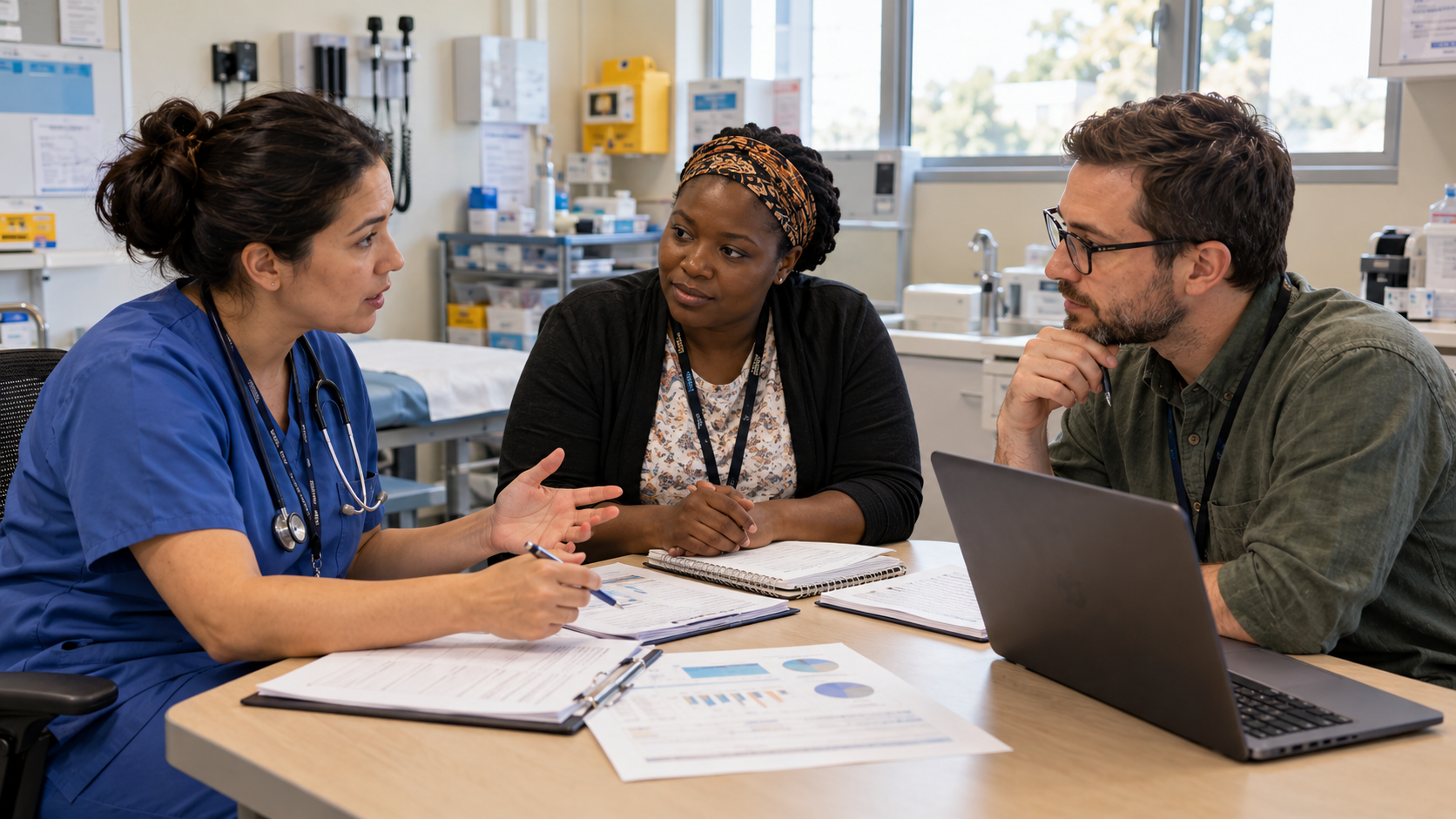
A nurse, community practitioner and researcher discuss a plan at a clinic table. AI-generated illustration; not a photograph of this project.
Evidence can convince while practice stays the same. Demonstrating Health Solutions: Science in Action looks for teams ready to put established knowledge to work in the conditions that shape health. This is a three-year implementation effort beyond proof of concept. Knowledge producers and users need committed roles and measurable outcomes.
No fixed award range is published; funding complements other resources rather than promising an entire project budget. A charitable lead is encouraged, and most participating funders restrict grants to qualifying public charities. State universities are eligible; for-profit funding is excluded. Individual funder rules can be narrower than the collective’s invitation. Drug trials, device commercialization and early hardware prototypes fall outside scope. Complete the portal eligibility questionnaire before the 18 November preproposal deadline, 3 p.m. Eastern. Invited full proposals follow in April 2027; the exact date remains pending. The official PDF names the application portal, but its live form was not verified. Confirm access while aligning partners and financing.
Before you start
U.S.-relevant implementation partnerships; qualifying public charities generally required by participating funders. State universities eligible; for-profit funding excluded.
The finer details
Complete portal eligibility questionnaire and preproposal; invited full application follows. Establish rigorous evidence, committed implementation partners and complementary resources.
Exact invited full-proposal date not yet stated. No fixed grant size. Some participating funders have stricter entity eligibility than the collective’s broad invitation.
Official PDF supplies application portal URL; browser extraction could not verify its live form state.
The US$10 million call remains open for work that helps people govern, build or challenge AI.
Humanity AI · Communities Leading on AI Open Call
Four community participants discuss ideas around a laptop and meeting table. AI-generated illustration; not a photograph of this project.
Workers, artists and educators can bring something an AI demonstration lacks: a trusted place to decide how the technology should be used. Humanity AI’s Communities Leading on AI call supports communities governing AI, building it around their needs or challenging harmful uses. Name a decision the community will influence.
Connect one of those approaches to education, labor and the economy, or the humanities, arts and culture. U.S.-based communities need a qualifying charitable organization or fiscal sponsor to handle the award. Literacy workshops, adoption campaigns and research alone are insufficient; for-profit seed investment falls outside scope. Open models receive priority, but are not a universal eligibility condition.
Awards range from US$75,000 to US$1 million for up to three years. The US$10 million figure is the total call pool, not an individual award. Applications close 21 October at 4:59 p.m. Pacific, also printed as 7:59 p.m. Eastern. The timetable is unchanged. Name the participants, their authority and the organization’s accountability.
Before you start
U.S.-based organizations/communities with qualifying charitable status or fiscal sponsorship; named issue-area and AI-approach fit required. Literacy/adoption/research alone and for-profit seed investment excluded.
The finer details
Apply through Lever for Change/Submittable; confirm charitable status or fiscal sponsor and the issue-area/AI-approach combination.
Twelve funding selections for this week. Stories distinguish current official instructions from prior records and unresolved details. Amounts remain in the funder's currency; dates are in 2026 unless stated. Murdock opens 15 October; PCORI’s first required submission closes 1 October.
STILL OPEN / United States national reach; regional work in Illinois
Useful knowledge needs a route to older adults.
1 min read ·
RRF backs the work of translating and sharing what can improve life after 60.
RRF Foundation for Aging · Knowledge Sharing & Awareness Raising Grants
A facilitator and three older adults review a large-format resource in a library. AI-generated illustration; not a photograph of this project.
Good work can remain confined to its originator. RRF’s Knowledge Sharing route supports teams turning evidence or experience into something others can use to improve life after 60. A newsletter is a format; identify the knowledge, its audience and what they can change.
Work must benefit adults aged 60+, nationally in the U.S. or regionally in Illinois. Charitable organizations and qualifying public entities generally use this route; institutional and fiscal-sponsor cases need the eligibility guidance. No formal award minimum or maximum is published. US$100,000 examples are not a ceiling. Begin with the official eligibility quiz and Letter of Inquiry; full proposals require invitation.
The program page says Monday, 2 November at 5 p.m. Central without printing the year. The weekday indicates 2026, but general and program-specific closing-time instructions differ. Confirm the operative year and time. A quiz deep link is unverified, so begin at the official page.
Before you start
Work intentionally benefiting adults aged 60+, nationally in the U.S. or regionally in Illinois. Generally charitable organizations and qualifying public entities; exceptions need eligibility guidance.
The finer details
Begin with official eligibility quiz and required Letter of Inquiry; full proposal by invitation. Confirm current-cycle year and conflicting closing-time instructions.
Program page does not print the year. Program-specific and general closing-time instructions differ; confirm before submitting. No fixed award-size commitment.
New applications must begin with the eligibility quiz on the official page; a deep link to the quiz is not verified.
The Northwest grant window opens on 15 October, with organizational readiness built into the rules.
M. J. Murdock Charitable Trust · Strategic Project Grants, Fall 2026 Letter of Inquiry Window
Four nonprofit staff members consider a workshop space and its equipment. AI-generated illustration; not a photograph of this project.
A new program, staff position or essential equipment can change an organization’s capacity to serve. Murdock’s Strategic Project Grants support that substantial next step. The minimum request is US$100,000 and minimum project size US$200,000. These are entry thresholds, not an award ceiling; equipment applicants must cover at least half the purchase cost.
Applicants generally need three complete operating financial years and an eligible charitable, public, Tribal or faith structure. The primary region covers Alaska, Idaho, Montana, Oregon and Washington, with regional-impact rules and specified exceptions, including some faith-based British Columbia work. Fiscally sponsored projects and ordinary operating support do not fit. Complete the eligibility quiz first.
The Letter of Inquiry window opens 15 October and closes 11 November at 5 p.m. Pacific. Only approved opening submissions proceed to the full application period, 27 January through 1 March 2027, closing at 5 p.m. Pacific. Prepare the project budget, remaining financing and evidence of organizational stability. Show how the new capacity will last.
Before you start
Established eligible charitable/public/Tribal/faith organizations with three operating financial years and qualifying Northwest location or impact; specified regional exceptions apply. Fiscally sponsored projects excluded.
The finer details
Complete eligibility quiz and Letter of Inquiry within the window; approved applicants proceed. Meet minimum request/project amounts and equipment cost-sharing rules.
WSMA’s collaboration grant remains open, with a specific service floor and a budget test for the lead.
Washington State Microenterprise Association · 2026–2027 Statewide Collaborative Projects Grant
Four business-support partners work through a plan with notebooks and papers. AI-generated illustration; not a photograph of this project.
A small grant demands a delivery plan. WSMA’s US$10,000 collaboration awards must reach at least 35 distinct Washington microbusinesses, with an hour of in-depth support each. This funds assistance, not business cash grants. Businesses served have five or fewer employees and financing needs below US$50,000; 15 awards are anticipated.
Teams need two to five partners, required Evergreen BizLink profiles and a lead with two years’ relevant experience. Academic institutions cannot receive grant funding, though other-resource or consultancy participation is possible. The request cannot exceed 20% of the lead’s relevant actual annual budget. Payment is 80% after contracting and 20% after the approved final report; budget for that cash flow.
Applications close 16 October at an issuer-labeled 5 p.m. PST, requiring confirmation during daylight time. Final-report weekday wording also conflicts with the printed date, 16 June 2027. Earlier information sessions were optional; their passing did not close the call. Assign outreach, delivery and counting, then test the service and budget requirements.
Before you start
Washington collaborations of two to five partners; experienced lead and required BizLink profiles. Academic institutions cannot receive funding; other-resource or consultancy participation may be possible.
The finer details
Serve 35 distinct eligible businesses for at least one hour each; request at most 20% of relevant actual lead budget. Meet report/spend requirements.
Issuer PST wording needs confirmation. Final-report weekday wording conflicts with the calendar date; 16 June 2027 is preserved as the printed date.
The school and community call remains open for coordinated work with young people and families.
Office of Juvenile Justice and Delinquency Prevention · OJJDP FY 2026 Community and Schools Youth Drug Prevention Program
Young adults participate in a creative workshop in a bright community room. AI-generated illustration; not a photograph of this project.
A school cannot carry a prevention strategy alone. OJJDP’s Community and Schools Youth Drug Prevention program links schools, coalitions and law enforcement around education, early intervention, mentoring, family engagement and referrals. Describe how partners identify young people who need help and provide it.
Eligible governments, federally recognized Tribes and nonprofits with or without charitable status may apply; higher-education institutions are excluded. No matching funds are required. Sixteen awards of up to US$750,000 are anticipated from a US$12 million pool, for 36 months starting January 2027. The pool is not available to each applicant. Build the budget around delivery capacity.
File the SF-424 in Grants.gov by 29 October, 11:59 p.m. Eastern, then the full JustGrants application by 5 November, 8:59 p.m. Registration advice starts 29 September, with 15 October the latest recommended start; neither replaces a filing. A call-specific form destination is unverified. Check federal accounts and coalition responsibilities against official guidance.
Before you start
Eligible governments, federally recognized Tribes and nonprofits with or without charitable status; higher-education institutions excluded. No match required.
The finer details
Complete required SF-424 and JustGrants filings and federal registrations. Coordinate with law enforcement/community coalitions; registration start advice is not a deadline.
Official solicitation provides the required Grants.gov and JustGrants workflow. A call-specific form deep link is not verified; The Application information link leads to authoritative submission guidance.
THE ARKUS SIGNAL / IDEAS & EXPERIMENTSBEYOND THE OPPORTUNITIES
An opening is a beginning.
A useful funding calendar distinguishes when to prepare, when to enter and when the proposal must be complete.
A funding notice compresses a large decision into a small rectangle: purpose, amount, deadline, apply. Before an organization can decide whether to enter, it needs to know what the money can change and what must already be in place. This week’s calls make those questions practical: a partner, a working prototype or an agency training plan can determine the answer.
An intake opening, a preliminary inquiry and a final submission are different events. Marking all three as deadlines makes a calendar orderly while leaving the work disordered. PCORI’s required initial inquiry comes before its invited full application. Murdock’s opening gives teams a window to enter. Neither becomes optional because a later date is farther away.
The amount needs the same care. A ceiling is not a typical award. A sponsor prize is not money every selected team receives. SPRINT’s travel support does not become a whole research budget because travel makes the project possible. Ask what the offer pays for and who carries the remaining cost.
Partnership changes the calculation. A collaborator can bring expertise, access, delivery capacity or independent funding. That is more useful than a name on a diagram. Make the contribution legible: which institution does which work, which side pays and who takes responsibility when an experiment or timetable changes.
Start with a smaller, clearer decision. Write down the public problem, proposed change, evidence that the team can deliver and first required action. A missing answer is a research task; a disqualifying answer is a reason to stop. A well-chosen call opens a door. The calendar is part of the route through it, not the route itself.
PREPARE BEFORE ENTRYAn intake openingMurdock opens its next intake on 15 October.
COMPLETE THE EARLY GATEA required inquiryPCORI requires the initial Letter of Intent first.
FINISH THE PROPOSALA final submissionSPRINT proposals close on 26 October.
Official calls: M. J. Murdock Charitable Trust↗; additional calls are identified in the stories. Distinctions drawn from the calls in this issue.
The remarkably small idea lab.
Three choices. Find the next useful action. Choose one answer per row; each points toward a different kind of preparation work.
Mostly first answers: verify. Second: involve people. Third: plan delivery. Mixed: include all three.
Editorial prompt, not an eligibility decision. Answers stay here.
THE ARKUS SIGNALTHE STRIP / THREE ORIGINAL VIEWPOINTS
Between the lines.
Three scenes, each sparked by an opportunity in this week’s editions.
Research, design and operating judgment for the next practical decision.
Chandler LewisFounder · Managing DirectorWalter BenadofPartner · Global Markets and InvestmentsNadia LerougeDeputy Managing DirectorCloud (Yiyun) QiuPartner · Design and Innovation StrategyAarav GhaiResearch Analyst
Arkus Innovation Studios is a commercial advisory and venture studio for founders, investors and enterprise teams deciding what to build, improve or investigate. We turn broad questions into a defined piece of work, examine the available evidence and help the team make a practical next decision.
Our work includes Startup Diagnostics, Portfolio Diagnostics, AI Workflow Sprints and enterprise assessments. The Innovation Compass gives assessment work its structure. The Teixeira Framework organizes four possible recommendations: Accelerate, Incubate, Develop or Watch. A recommendation is useful when its reasoning, assumptions and next test are clear enough for the team to use. We combine research, operating experience, design and commercial judgment.
That can mean checking a market claim, examining a technology's limits, testing an AI workflow or organizing the evidence needed for a proposal. We define responsibilities before beginning and keep the proposed outcome connected to the question the client needs answered. Arkus is the commercial studio; 360 Social Impact Studios and Enough Ventures are separate organizations with different legal structures.
If an opportunity in this issue connects with your work, send the public call, a brief description of your idea or capabilities and the role you have in mind. Where eligibility and agreed responsibilities permit, Arkus can discuss leading or joining the work. Contact Nadia Lerouge through the invitation below to begin that conversation.
An Arkus Innovation Studios publicationPeople & possibilities
The Arkus Signal
Grants and funding opportunities worth pursuing
FUNDING EDITION30 SEPTEMBER 2026ISSUE 03 / PRINT EDITION
Grants & research funding
Research begins with a plane ticket.
The revised SPRINT call opens a route for overseas collaborators, with an eligible São Paulo researcher at the center.
Two researchers examine a small sample at a sunlit laboratory bench. AI-generated illustration; not a photograph of this project.
Research partnerships begin with an eligible lead and a shared plan. FAPESP’s revised SPRINT call supports overseas collaboration through mobility, with a São Paulo investigator and one foreign institution at its center.
Inside: twelve funding stories, from patient involvement in research to staff training for work with young families. New youth reentry and practical business calls sit beside deadlines that are already close.
Follow the partnership
Two different starts for research.
Choose a call to see the first useful step.
FAPESP
Research mobility comes first.
An eligible FAPESP lead and one foreign institution start with mobility. SAGe registrations, foreign mission funding and underlying grant conditions are required.
Eligible organizations prepare patients and researchers for comparative clinical research. Involve partners from the start; the initial Letter of Intent precedes any invited full application.
Editorial illustration. SPRINT phase one funds mobility; later awards are conditional. PCORI requires an initial inquiry before any invited application. Confirm current eligibility.Explore the opportunities ↓
THE ARKUS SIGNAL / FUNDINGTHE OPPORTUNITIES / 02
REVISED / São Paulo, Brazil, with a foreign research institution partner
A research partnership can begin with a plane ticket.
1 min read ·
The revised SPRINT call opens a route for overseas collaborators, with an eligible São Paulo researcher at the center.
FAPESP · Chamada de Propostas SPRINT 2026, Edição 1
Two researchers examine a small sample at a sunlit laboratory bench. AI-generated illustration; not a photograph of this project.
An overseas collaboration can begin with the practical problem of getting researchers into the same laboratory. FAPESP’s revised SPRINT call pays for mobility, giving an eligible São Paulo principal investigator and one foreign institution a starting point. The research must fit one of seven mandatory strategic themes, and both responsible researchers need complete SAGe registrations.
Phase one offers up to US$12,500 equivalent for one year. Later phases can add US$12,500 and US$25,000, subject to approval, reciprocity and overseas cofunding; these are not an automatic US$50,000 award. The foreign side must evidence its mission funding. An underlying grant still under review needs approval before selection, with at least six months remaining at the proposed start.
Edition 1 closes on 26 October; no closing hour or time zone is published. Edition 2 follows on 22 February 2027. Prepare an exchange plan that explains what the visits make possible, who travels and how each institution contributes.
Before you start
Eligible FAPESP-supported São Paulo researchers with one foreign institution; qualifying grants under review require approval. Mandatory strategic-theme and remaining-term rules apply.
The finer details
Complete both SAGe registrations, evidence foreign mission funding and confirm the underlying grant and proposed start satisfy the call.
FIRST FEATURE / Projects relevant to U.S. patients and healthcare; qualifying foreign organizations may lead
Patients need a place in the research team.
1 min read ·
Up to US$300,000 can help communities and researchers learn to work together. The first submission is due tomorrow.
Patient-Centered Outcomes Research Institute · Engagement Award: Capacity Building, Fall 2026 Cycle
Two people discuss questions across a community meeting table. AI-generated illustration; not a photograph of this project.
A patient panel is easy to announce and harder to make useful. PCORI’s Capacity Building award supports the skills and relationships that let patients, caregivers and researchers shape future comparative clinical effectiveness studies together. It funds preparation for that research, not the study itself. A general health education program needs a genuine research connection.
Nonprofit and for-profit organizations may apply; individuals may not. U.S. applicants need an employer identification number. A foreign lead must justify U.S. healthcare benefit and include a key U.S. organization and co-lead as subcontractor. Partners must help develop the proposal; full applications need their support letters. The US$300,000 ceiling includes direct and indirect costs over at most two years.
The required initial Letter of Intent closes on 1 October at 5 p.m. Eastern. Only invited teams submit a full application by 11 January 2027, also at 5 p.m. Capacity Building permits distinct submissions with different project leads; the separate Small Organizations track has a cross-track restriction.
Before you start
Nonprofit or for-profit organizations, not individuals. Foreign leads need justified U.S. benefit and a key U.S. organization/co-lead as subcontractor.
The finer details
Required initial Letter of Intent through PCORI Connect; full application by invitation. Partners participate from proposal development; distinct submissions need different project leads.
STILL OPEN / King County, Washington, United States
The training grant comes with time in the diary.
1 min read ·
King County’s early-childhood call is still open, but staff availability and portal access matter as much as the budget.
Public Health – Seattle & King County · 2027 Promoting First Relationships Agency Training, RFA 2026CHS1082RFA
Three service professionals exchange ideas in a community learning room. AI-generated illustration; not a photograph of this project.
A training grant also puts time in the calendar. King County’s Promoting First Relationships support requires roughly 67 hours over 16 weeks. Agencies need staff cover while maintaining family services; US$2,000–US$20,000 supports training, not unrestricted operations.
Trainees must already be employed, have two years’ birth-to-five family-service experience and spend at least half their role on ongoing direct service. Intake-only or brief referral work does not qualify. Level 3 requires Level 2 preparation. Recording equipment and participating families matter too. Submit a signed cover sheet, project description and personnel budget; Agiloft accounts can take three to five business days.
The recorded close is 1 October at 2 p.m., but issuer PST wording needs clarification. Email and portal instructions differ, so confirm the current submission route. Interview dates also differ between packet sections; neither is an entry deadline. Earlier optional events have passed. Existing applicants should check access and the controlling instructions before polishing the last paragraph.
Before you start
King County nonprofit human-service agencies; employed trainees need two years’ relevant experience and at least 50% ongoing direct service. Level 3 requires Level 2.
The finer details
Confirm Agiloft access and controlling route; submit signed cover sheet, project description and personnel budget. Account creation can take three to five business days.
Issuer PST wording needs confirmation; do not silently convert it to PDT. RFA includes email language alongside current Agiloft submission instructions. Interview dates differ between packet sections; none is presented as an entry deadline.
NEW SELECTION / Global health and wellbeing; no geographic restriction stated
Build the fund that owns the problem.
1 min read ·
A short initial proposal can open a much larger conversation about funding and managing a global-health mission.
Coefficient Giving · Request for Proposals: Launchpad Funds
Four colleagues map a funding strategy around a wooden table. AI-generated illustration; not a photograph of this project.
A compelling proposal can still leave a problem without an owner. Coefficient Giving’s Launchpad Funds call looks for a fund or implementing organization able to take responsibility for a global-health or wellbeing mission. The case needs a funding strategy and decision-makers.
Individuals, new or existing fund teams, incubators and implementing organizations can enter; for-profit structures may be considered through due diligence. No geographic restriction is stated. Pre-seed support ranges from US$200,000 to US$10 million over up to 24 months; seed and scaling support runs from US$10 million to US$50 million or more over up to 36 months.
The expression of interest is due 2 October, without a published closing hour or time zone. Seed and scaling teams should identify a general manager; early teams can explain how they will recruit one. Future deployment of US$100 million or more is a fund ambition, not promised applicant funding. Begin with a compact proposal, team background and rough budget.
Before you start
Individuals, fund teams, incubators and implementing organizations; for-profit structures subject to due diligence. No geographic restriction stated.
The finer details
Submit an expression of interest. Seed/scaling teams identify a general manager; pre-seed teams may propose recruiting one.
UPDATED / Global, with some sponsor prizes restricted by location or subject
A working solution gets its opening.
1 min read ·
The 2027 economic-prosperity window is now open for teams tackling work, housing and financial resilience.
MIT Solve · 2027 Global Economic Prosperity Challenge
Two people test a service on a tablet at a neighborhood produce market. AI-generated illustration; not a photograph of this project.
A working response to unstable income, financial shocks or inadequate housing has a new window. MIT Solve’s 2027 Global Economic Prosperity Challenge opened on 22 September. The global call accepts technology broadly, including traditional knowledge and business models, but ordinary entries need a functioning prototype. Concept-stage proposals belong only in the Indigenous Communities Fellowship.
Selected Solver teams receive US$10,000 and enter a nine-month support program. Competitive sponsor awards have separate eligibility: advertised prizes include up to US$150,000 for AI for Humanity and US$100,000 for at least one U.S.-based team. Other pools may be shared. Neither stacked prizes nor historical average funding should become automatic revenue in the plan.
Submit by 2 November at noon Eastern Standard Time. Previously selected Solvers can return with a new solution, but cannot re-enter the same selected solution. Show who uses the solution, what evidence supports it and which barrier the network can remove.
Before you start
Global teams with functioning prototypes or later-stage solutions. Concepts only through the Indigenous Communities Fellowship; previous Solvers must enter a new solution.
The finer details
Submit online by the published close; demonstrate economic-prosperity fit and a functioning solution. Prior selection excludes the same selected solution.
The new youth call supports continuity between confinement and community, with a distinct nonprofit route.
Office of Juvenile Justice and Delinquency Prevention · OJJDP FY 2026 Second Chance Act Youth Reentry Program
A young adult and two counselors plan next steps at a community-center table. AI-generated illustration; not a photograph of this project.
A release date is a poor moment to begin arranging support. OJJDP’s Second Chance Act Youth Reentry call connects planning before release with relationships and services afterward. Both categories offer up to US$750,000 for 36 months; 16 awards are anticipated from a US$12,440,720 pool. The budget still depends on which category the applicant uses.
Category 2 accepts nonprofits with or without charitable status, excluding higher education, without matching funds. Eligible government and Tribal applicants use Category 1 with a 50% nonfederal match. Nonprofit applications need a draft or executed corrections-community memorandum of understanding; it must be fully executed to access award funds above US$50,000.
Two filings are mandatory: the SF-424 in Grants.gov by 2 November, 11:59 p.m. Eastern, then JustGrants by 9 November, 8:59 p.m. Registration advice starts 2 October, with 16 October the latest suggested start; neither replaces a filing. A call-specific form destination is unverified. Confirm federal accounts against official guidance.
Before you start
Category 2 nonprofits, excluding higher education, need no match. Category 1 eligible government/Tribal applicants need 50% nonfederal match.
The finer details
Complete both federal filings and registrations. Nonprofits need a draft/executed MOU; executed agreement required before accessing more than US$50,000.
Official solicitation provides the required Grants.gov and JustGrants workflow. A call-specific form deep link is not verified; The Application information link leads to authoritative submission guidance.
NEW SELECTION / Health outcomes and implementation relevant to the United States
Evidence is ready. The system has to catch up.
1 min read ·
This health call asks teams to put established knowledge to work beyond the pilot stage.
Doris Duke Foundation and the Pathways for Health Research Collective · Demonstrating Health Solutions: Science in Action
A nurse, community practitioner and researcher discuss a plan at a clinic table. AI-generated illustration; not a photograph of this project.
Evidence can convince while practice stays the same. Demonstrating Health Solutions: Science in Action looks for teams ready to put established knowledge to work in the conditions that shape health. This is a three-year implementation effort beyond proof of concept. Knowledge producers and users need committed roles and measurable outcomes.
No fixed award range is published; funding complements other resources rather than promising an entire project budget. A charitable lead is encouraged, and most participating funders restrict grants to qualifying public charities. State universities are eligible; for-profit funding is excluded. Individual funder rules can be narrower than the collective’s invitation. Drug trials, device commercialization and early hardware prototypes fall outside scope. Complete the portal eligibility questionnaire before the 18 November preproposal deadline, 3 p.m. Eastern. Invited full proposals follow in April 2027; the exact date remains pending. The official PDF names the application portal, but its live form was not verified. Confirm access while aligning partners and financing.
Before you start
U.S.-relevant implementation partnerships; qualifying public charities generally required by participating funders. State universities eligible; for-profit funding excluded.
The finer details
Complete portal eligibility questionnaire and preproposal; invited full application follows. Establish rigorous evidence, committed implementation partners and complementary resources.
Exact invited full-proposal date not yet stated. No fixed grant size. Some participating funders have stricter entity eligibility than the collective’s broad invitation.
Official PDF supplies application portal URL; browser extraction could not verify its live form state.
The US$10 million call remains open for work that helps people govern, build or challenge AI.
Humanity AI · Communities Leading on AI Open Call
Four community participants discuss ideas around a laptop and meeting table. AI-generated illustration; not a photograph of this project.
Workers, artists and educators can bring something an AI demonstration lacks: a trusted place to decide how the technology should be used. Humanity AI’s Communities Leading on AI call supports communities governing AI, building it around their needs or challenging harmful uses. Name a decision the community will influence.
Connect one of those approaches to education, labor and the economy, or the humanities, arts and culture. U.S.-based communities need a qualifying charitable organization or fiscal sponsor to handle the award. Literacy workshops, adoption campaigns and research alone are insufficient; for-profit seed investment falls outside scope. Open models receive priority, but are not a universal eligibility condition.
Awards range from US$75,000 to US$1 million for up to three years. The US$10 million figure is the total call pool, not an individual award. Applications close 21 October at 4:59 p.m. Pacific, also printed as 7:59 p.m. Eastern. The timetable is unchanged. Name the participants, their authority and the organization’s accountability.
Before you start
U.S.-based organizations/communities with qualifying charitable status or fiscal sponsorship; named issue-area and AI-approach fit required. Literacy/adoption/research alone and for-profit seed investment excluded.
The finer details
Apply through Lever for Change/Submittable; confirm charitable status or fiscal sponsor and the issue-area/AI-approach combination.
Twelve funding selections for this week. Stories distinguish current official instructions from prior records and unresolved details. Amounts remain in the funder's currency; dates are in 2026 unless stated. Murdock opens 15 October; PCORI’s first required submission closes 1 October.
STILL OPEN / United States national reach; regional work in Illinois
Useful knowledge needs a route to older adults.
1 min read ·
RRF backs the work of translating and sharing what can improve life after 60.
RRF Foundation for Aging · Knowledge Sharing & Awareness Raising Grants
A facilitator and three older adults review a large-format resource in a library. AI-generated illustration; not a photograph of this project.
Good work can remain confined to its originator. RRF’s Knowledge Sharing route supports teams turning evidence or experience into something others can use to improve life after 60. A newsletter is a format; identify the knowledge, its audience and what they can change.
Work must benefit adults aged 60+, nationally in the U.S. or regionally in Illinois. Charitable organizations and qualifying public entities generally use this route; institutional and fiscal-sponsor cases need the eligibility guidance. No formal award minimum or maximum is published. US$100,000 examples are not a ceiling. Begin with the official eligibility quiz and Letter of Inquiry; full proposals require invitation.
The program page says Monday, 2 November at 5 p.m. Central without printing the year. The weekday indicates 2026, but general and program-specific closing-time instructions differ. Confirm the operative year and time. A quiz deep link is unverified, so begin at the official page.
Before you start
Work intentionally benefiting adults aged 60+, nationally in the U.S. or regionally in Illinois. Generally charitable organizations and qualifying public entities; exceptions need eligibility guidance.
The finer details
Begin with official eligibility quiz and required Letter of Inquiry; full proposal by invitation. Confirm current-cycle year and conflicting closing-time instructions.
Program page does not print the year. Program-specific and general closing-time instructions differ; confirm before submitting. No fixed award-size commitment.
New applications must begin with the eligibility quiz on the official page; a deep link to the quiz is not verified.
The Northwest grant window opens on 15 October, with organizational readiness built into the rules.
M. J. Murdock Charitable Trust · Strategic Project Grants, Fall 2026 Letter of Inquiry Window
Four nonprofit staff members consider a workshop space and its equipment. AI-generated illustration; not a photograph of this project.
A new program, staff position or essential equipment can change an organization’s capacity to serve. Murdock’s Strategic Project Grants support that substantial next step. The minimum request is US$100,000 and minimum project size US$200,000. These are entry thresholds, not an award ceiling; equipment applicants must cover at least half the purchase cost.
Applicants generally need three complete operating financial years and an eligible charitable, public, Tribal or faith structure. The primary region covers Alaska, Idaho, Montana, Oregon and Washington, with regional-impact rules and specified exceptions, including some faith-based British Columbia work. Fiscally sponsored projects and ordinary operating support do not fit. Complete the eligibility quiz first.
The Letter of Inquiry window opens 15 October and closes 11 November at 5 p.m. Pacific. Only approved opening submissions proceed to the full application period, 27 January through 1 March 2027, closing at 5 p.m. Pacific. Prepare the project budget, remaining financing and evidence of organizational stability. Show how the new capacity will last.
Before you start
Established eligible charitable/public/Tribal/faith organizations with three operating financial years and qualifying Northwest location or impact; specified regional exceptions apply. Fiscally sponsored projects excluded.
The finer details
Complete eligibility quiz and Letter of Inquiry within the window; approved applicants proceed. Meet minimum request/project amounts and equipment cost-sharing rules.
WSMA’s collaboration grant remains open, with a specific service floor and a budget test for the lead.
Washington State Microenterprise Association · 2026–2027 Statewide Collaborative Projects Grant
Four business-support partners work through a plan with notebooks and papers. AI-generated illustration; not a photograph of this project.
A small grant demands a delivery plan. WSMA’s US$10,000 collaboration awards must reach at least 35 distinct Washington microbusinesses, with an hour of in-depth support each. This funds assistance, not business cash grants. Businesses served have five or fewer employees and financing needs below US$50,000; 15 awards are anticipated.
Teams need two to five partners, required Evergreen BizLink profiles and a lead with two years’ relevant experience. Academic institutions cannot receive grant funding, though other-resource or consultancy participation is possible. The request cannot exceed 20% of the lead’s relevant actual annual budget. Payment is 80% after contracting and 20% after the approved final report; budget for that cash flow.
Applications close 16 October at an issuer-labeled 5 p.m. PST, requiring confirmation during daylight time. Final-report weekday wording also conflicts with the printed date, 16 June 2027. Earlier information sessions were optional; their passing did not close the call. Assign outreach, delivery and counting, then test the service and budget requirements.
Before you start
Washington collaborations of two to five partners; experienced lead and required BizLink profiles. Academic institutions cannot receive funding; other-resource or consultancy participation may be possible.
The finer details
Serve 35 distinct eligible businesses for at least one hour each; request at most 20% of relevant actual lead budget. Meet report/spend requirements.
Issuer PST wording needs confirmation. Final-report weekday wording conflicts with the calendar date; 16 June 2027 is preserved as the printed date.
The school and community call remains open for coordinated work with young people and families.
Office of Juvenile Justice and Delinquency Prevention · OJJDP FY 2026 Community and Schools Youth Drug Prevention Program
Young adults participate in a creative workshop in a bright community room. AI-generated illustration; not a photograph of this project.
A school cannot carry a prevention strategy alone. OJJDP’s Community and Schools Youth Drug Prevention program links schools, coalitions and law enforcement around education, early intervention, mentoring, family engagement and referrals. Describe how partners identify young people who need help and provide it.
Eligible governments, federally recognized Tribes and nonprofits with or without charitable status may apply; higher-education institutions are excluded. No matching funds are required. Sixteen awards of up to US$750,000 are anticipated from a US$12 million pool, for 36 months starting January 2027. The pool is not available to each applicant. Build the budget around delivery capacity.
File the SF-424 in Grants.gov by 29 October, 11:59 p.m. Eastern, then the full JustGrants application by 5 November, 8:59 p.m. Registration advice starts 29 September, with 15 October the latest recommended start; neither replaces a filing. A call-specific form destination is unverified. Check federal accounts and coalition responsibilities against official guidance.
Before you start
Eligible governments, federally recognized Tribes and nonprofits with or without charitable status; higher-education institutions excluded. No match required.
The finer details
Complete required SF-424 and JustGrants filings and federal registrations. Coordinate with law enforcement/community coalitions; registration start advice is not a deadline.
Official solicitation provides the required Grants.gov and JustGrants workflow. A call-specific form deep link is not verified; The Application information link leads to authoritative submission guidance.
THE ARKUS SIGNAL / IDEAS & EXPERIMENTSBEYOND THE OPPORTUNITIES
An opening is a beginning.
A useful funding calendar distinguishes when to prepare, when to enter and when the proposal must be complete.
A funding notice compresses a large decision into a small rectangle: purpose, amount, deadline, apply. Before an organization can decide whether to enter, it needs to know what the money can change and what must already be in place. This week’s calls make those questions practical: a partner, a working prototype or an agency training plan can determine the answer.
An intake opening, a preliminary inquiry and a final submission are different events. Marking all three as deadlines makes a calendar orderly while leaving the work disordered. PCORI’s required initial inquiry comes before its invited full application. Murdock’s opening gives teams a window to enter. Neither becomes optional because a later date is farther away.
The amount needs the same care. A ceiling is not a typical award. A sponsor prize is not money every selected team receives. SPRINT’s travel support does not become a whole research budget because travel makes the project possible. Ask what the offer pays for and who carries the remaining cost.
Partnership changes the calculation. A collaborator can bring expertise, access, delivery capacity or independent funding. That is more useful than a name on a diagram. Make the contribution legible: which institution does which work, which side pays and who takes responsibility when an experiment or timetable changes.
Start with a smaller, clearer decision. Write down the public problem, proposed change, evidence that the team can deliver and first required action. A missing answer is a research task; a disqualifying answer is a reason to stop. A well-chosen call opens a door. The calendar is part of the route through it, not the route itself.
PREPARE BEFORE ENTRYAn intake openingMurdock opens its next intake on 15 October.
COMPLETE THE EARLY GATEA required inquiryPCORI requires the initial Letter of Intent first.
FINISH THE PROPOSALA final submissionSPRINT proposals close on 26 October.
Official calls: M. J. Murdock Charitable Trust↗; additional calls are identified in the stories. Distinctions drawn from the calls in this issue.
The remarkably small idea lab.
Three choices. Find the next useful action. Choose one answer per row; each points toward a different kind of preparation work.
Mostly first answers: verify. Second: involve people. Third: plan delivery. Mixed: include all three.
Editorial prompt, not an eligibility decision. Answers stay here.
THE ARKUS SIGNALTHE STRIP / THREE ORIGINAL VIEWPOINTS
Between the lines.
Three scenes, each sparked by an opportunity in this week’s editions.
Research, design and operating judgment for the next practical decision.
Chandler LewisFounder · Managing DirectorWalter BenadofPartner · Global Markets and InvestmentsNadia LerougeDeputy Managing DirectorCloud (Yiyun) QiuPartner · Design and Innovation StrategyAarav GhaiResearch Analyst
Arkus Innovation Studios is a commercial advisory and venture studio for founders, investors and enterprise teams deciding what to build, improve or investigate. We turn broad questions into a defined piece of work, examine the available evidence and help the team make a practical next decision.
Our work includes Startup Diagnostics, Portfolio Diagnostics, AI Workflow Sprints and enterprise assessments. The Innovation Compass gives assessment work its structure. The Teixeira Framework organizes four possible recommendations: Accelerate, Incubate, Develop or Watch. A recommendation is useful when its reasoning, assumptions and next test are clear enough for the team to use. We combine research, operating experience, design and commercial judgment.
That can mean checking a market claim, examining a technology's limits, testing an AI workflow or organizing the evidence needed for a proposal. We define responsibilities before beginning and keep the proposed outcome connected to the question the client needs answered. Arkus is the commercial studio; 360 Social Impact Studios and Enough Ventures are separate organizations with different legal structures.
If an opportunity in this issue connects with your work, send the public call, a brief description of your idea or capabilities and the role you have in mind. Where eligibility and agreed responsibilities permit, Arkus can discuss leading or joining the work. Contact Nadia Lerouge through the invitation below to begin that conversation.