An Arkus Innovation Studios publicationPeople & possibilities
The Arkus Signal
Grants and funding opportunities worth pursuing
FUNDING EDITION4 NOVEMBER 2026ISSUE 08
Grants & research funding
The idea has to reach the clinic.
A newly opened European health call expects €7 million to €8 million per project for interventions against four major groups of chronic disease.
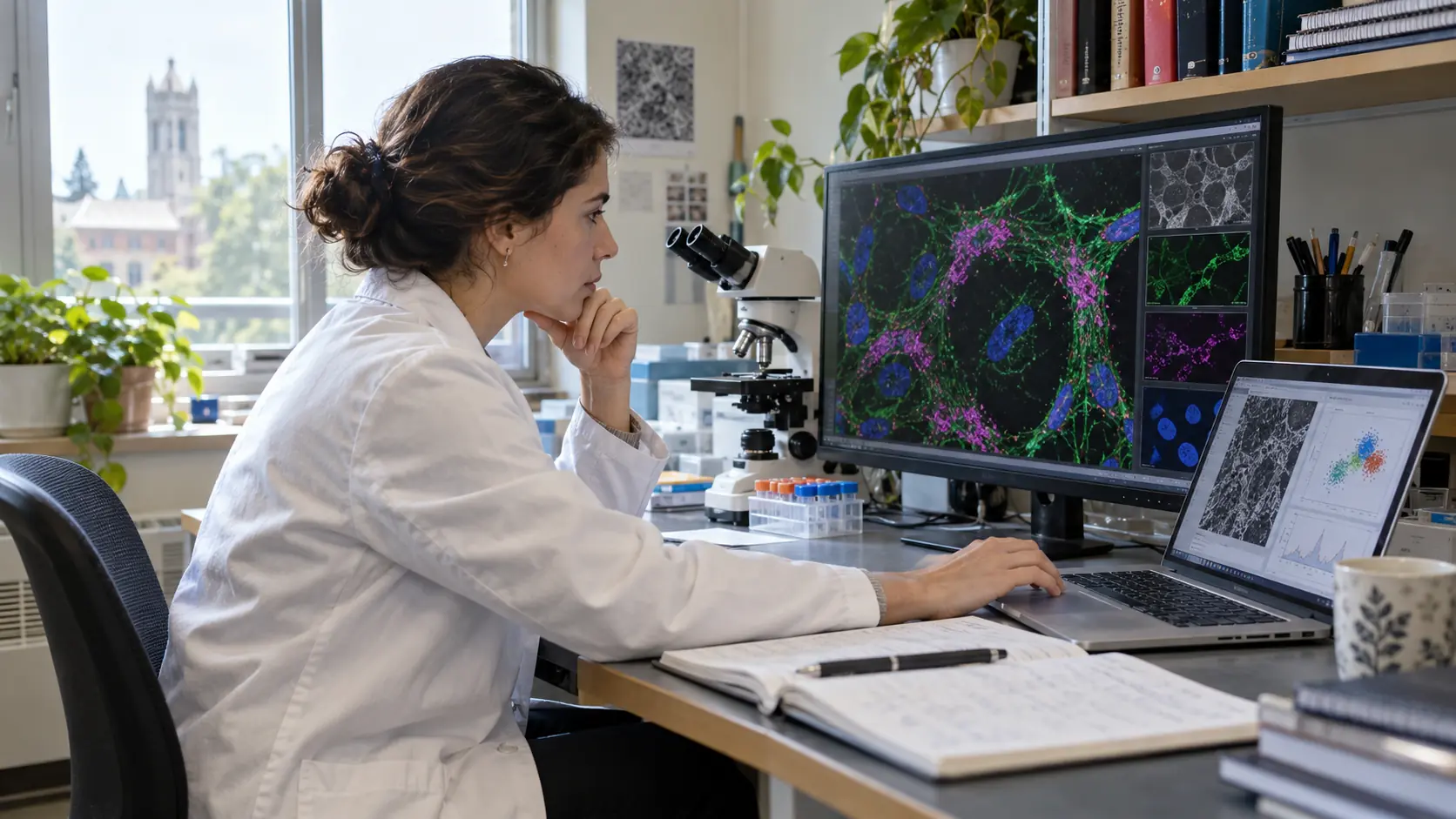
A researcher examines scientific images beside a microscope in an imagined laboratory. AI-generated illustration; not a photograph of this project.
A treatment can look promising long before it changes a patient’s care. This Horizon Europe call asks research teams to develop innovative interventions for cardiovascular disease, diabetes, chronic respiratory disease or chronic kidney disease. The work should advance toward meaningful clinical use, with the evidence needed to support it.
Inside: ten funding stories, with checked official notices, useful repeat coverage and clear first steps. New features and newly issued calls are identified separately.
FOLLOW THE ROUTE
Two ways to put an idea to work.
Choose a route to see what its starting point requires.
European Commission / European Health and Digital Executive Agency
Build the right core.
A funded US organization is additional to the required three-country EU/associated consortium. The first stage is assessed blind.
An editorial comparison, not an issuer scoring formula.Read the story ↗
THE ARKUS SIGNAL / FUNDINGTHE OPPORTUNITIES / 02
OPEN / International consortium with the required EU/associated-country core; US entities eligible for funding
The idea has to reach the clinic.
1 min read ·
A newly opened European health call expects €7 million to €8 million per project for interventions against four major groups of chronic disease.
European Commission / European Health and Digital Executive Agency · HORIZON-HLTH-2027-02-DISEASE-01-two-stage: Innovative healthcare interventions for non-communicable diseases
A researcher examines scientific images beside a microscope in an imagined laboratory. AI-generated illustration; not a photograph of this project.
A treatment can look promising long before it changes a patient’s care. This Horizon Europe call asks research teams to develop innovative interventions for cardiovascular disease, diabetes, chronic respiratory disease or chronic kidney disease. The work should advance toward meaningful clinical use, with the evidence needed to support it.
The expected European contribution is €7 million to €8 million per project, within a €63.8 million topic budget. These are planning figures, not guaranteed awards. US organizations can receive funding, but they cannot supply the minimum European consortium: three independent beneficiaries from three EU or associated countries, including at least one EU member.
The window opened October 29. First-stage applications are due February 17, 2027 at 5 p.m. Brussels local time; the second stage follows September 16. First-stage assessment is blind, so organization names, logos and personnel must stay out of the specified proposal sections. The research needs an identity. That draft must leave it off the page.
Before you start
Legal entities including eligible US organizations may receive funding. The consortium must include at least three independent beneficiaries from three different EU or associated countries, including at least one EU member. A US entity is additional to that minimum. The abstract and Part B of the blind first-stage proposal must omit organization names, acronyms, logos and personnel.
The finer details
Register for a participant identification code. Blind first stage must omit names, acronyms, logos and personnel from the proposal abstract and Part B. The minimum consortium still needs three independent EU/associated beneficiaries from three countries, including one EU member.
International consortium with the required EU/associated-country core; US entities eligible for funding
HaDEA labels both stages CEST, while the governing work programme says Brussels local time. Calendars use Europe/Brussels, which is CET in February and CEST in September.
The live application portal returned an automated-fetch error. Open status and dates are confirmed by current HaDEA and the revised work programme. No blanket US coordination prohibition is asserted.
Official sources checked November 3, 2026; stated qualifications retained.
OPEN / Global, with separate geography tests for individual prizes
A working idea gets a short runway.
1 min read ·
MIT Solve’s economic prosperity challenge closes November 6 at noon Eastern, with $10,000 for every selected Solver and separate competitive prizes.
MIT Solve · 2027 Global Economic Prosperity Challenge
A small-business owner and adviser review records together in an imagined neighborhood shop. AI-generated illustration; not a photograph of this project.
An income shock, a poor connection to work or an unaffordable home can unsettle far more than a household budget. MIT Solve is looking for technology-based solutions that help people build financial resilience, find quality employment or reach safe, affordable housing. The technology can take many forms. The practical benefit needs to be clear.
Every selected Solver team receives a $10,000 grant and access to a nine-month support program. Additional prizes have their own subject and geography rules; none should be added to the guaranteed amount. A prototype can qualify, while a concept without a functioning prototype belongs outside this challenge’s eligible stages.
Applications close Friday, November 6 at noon Eastern Standard Time. That is lunchtime, with no evening left to rescue a late draft. Previous Solvers may return with a genuinely new solution. Explain the people involved, the evidence that the approach works and why this team can make it useful beyond its first setting.
Before you start
Technology-based solutions at prototype, pilot, growth or scale stage, with global participation. Concept-only entries are outside this economic-prosperity challenge. Previously selected Solvers must propose a genuinely new solution. Individual prizes add geography or subject tests.
The finer details
Technology-based solution at a qualifying stage. Concept-only entries are not accepted for this economic-prosperity challenge. Previously selected teams need a genuinely new solution.
Global, with separate geography tests for individual prizes
Official sources checked November 3, 2026; stated qualifications retained.
OPEN / United States and eligible foreign organizations
First, show the tool can work.
1 min read ·
NCI’s R61 call offers up to $150,000 a year in direct costs for early tests of new cancer-research technology, closing November 10.
National Cancer Institute · RFA-CA-27-001: Early-Stage Innovative Technology Development for Basic and Clinical Cancer Research
Researchers prepare samples and inspect scientific images in an imagined laboratory. AI-generated illustration; not a photograph of this project.
A new way to examine a cell or handle a biospecimen needs evidence that its basic promise is real. NCI’s early-stage technology call supports those first technical tests. The intended advance is the method or instrument itself, with a cancer-relevant use. A new biological question answered using familiar equipment does not satisfy that distinction.
The grant provides up to $150,000 a year in direct project costs for up to three years. Eligible applicants include universities, nonprofits, businesses and foreign organizations. Clinical trials are not permitted. Foreign applicants may apply directly, but foreign subawards and subcontracts are prohibited under this notice. A cross-border team therefore needs to read the funding structure as carefully as the research scope.
Applications close November 10 at 5 p.m. in the applying organization’s local time. NIH registrations must be complete before submission and can take six weeks or more. An existing account is useful only if it is still active. Check that foundation before building the final application around it.
Before you start
Listed higher education institutions, nonprofits with or without 501(c)(3) status, businesses, governments and foreign organizations may apply. No clinical trials. Foreign subawards/subcontracts are prohibited; direct foreign applicants and certain unfunded collaborations remain permitted under the notice.
The finer details
Complete active SAM.gov, Grants.gov and eRA Commons registrations before submission; these can take six weeks or more. No clinical trials. Foreign subawards/subcontracts are prohibited.
United States and eligible foreign organizations
The source states 5 p.m. in the applicant organization’s local time. Calendars remain all-day until the applying organization’s time zone is chosen.
Official sources checked November 3, 2026; stated qualifications retained.
OPEN / United States and eligible foreign organizations
One good result is the beginning.
1 min read ·
NCI’s R33 call backs rigorous validation of emerging cancer-research tools, with up to $300,000 a year in direct costs and a November 10 deadline.
National Cancer Institute · RFA-CA-27-002: Advanced Development and Validation of Emerging Technologies for Basic and Clinical Cancer Research
Two researchers examine a microscope image together in an imagined laboratory. AI-generated illustration; not a photograph of this project.
A prototype that works once has made a useful start. A research community needs to know whether the result can be repeated, trusted and used in a relevant setting. NCI’s advanced technology call addresses that next stretch: improving and validating an emerging tool after its major feasibility gaps have been overcome.
Applicants need supportive preliminary data and a rigorous technical validation plan. Up to $300,000 a year in direct costs is available for no more than three years. The technology must add meaningful cancer-research capabilities; applying an existing tool to a novel biological question is outside scope. Clinical trials are excluded. Eligible foreign organizations may apply, but foreign subawards and subcontracts are prohibited.
The full application is due November 10 at 5 p.m. in the applicant organization’s local time. Complete registrations beforehand and allow time to correct submission errors. This is a different maturity stage from the companion R61 call. Choose the stage the evidence supports, rather than the ceiling that makes the budget look more comfortable.
Before you start
Listed higher education institutions, nonprofits with or without 501(c)(3) status, businesses, governments and foreign organizations may apply. No clinical trials. Foreign subawards/subcontracts are prohibited; direct foreign applicants and certain unfunded collaborations remain permitted under the notice.
The finer details
Supportive preliminary data must show major feasibility gaps overcome. Active registrations before submission. No clinical trials or foreign subawards/subcontracts.
United States and eligible foreign organizations
Applicant-local 5 p.m. cannot be converted without the organization’s time zone; reminder is all-day.
Official sources checked November 3, 2026; stated qualifications retained.
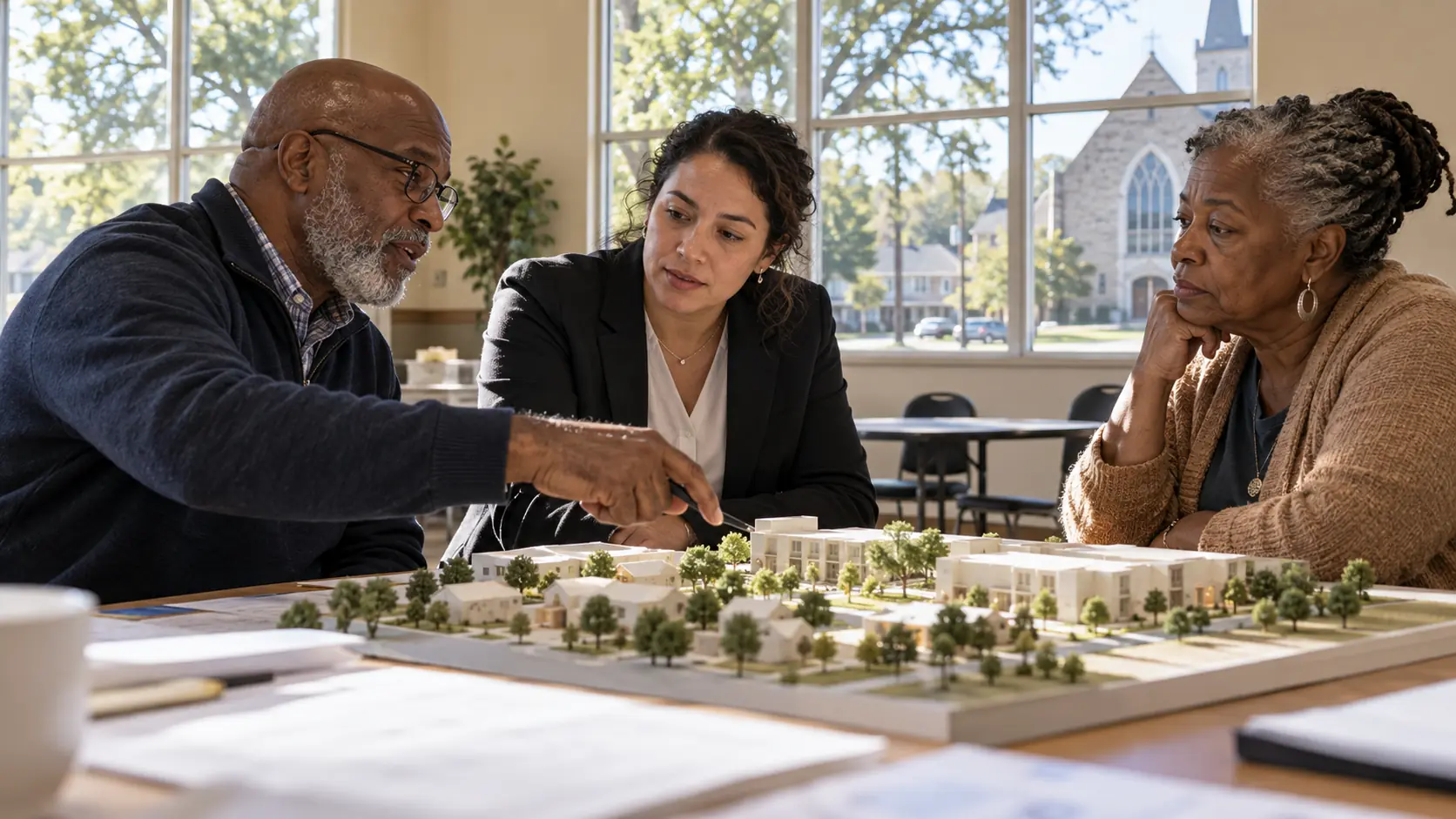
A nonprofit planning team discusses a building model in an imagined project meeting. AI-generated illustration; not a photograph of this project.
Adding a program can mean hiring the person who will keep it running, buying the equipment that makes it possible or creating room for more people. Murdock’s strategic grants support those different changes. The distinction matters before costs are committed, because staff or programs begun before the Trust’s site visit can be ineligible.
The minimum grant request is $100,000 and the project budget must reach $200,000. Those are separate floors, not a universal matching formula. Equipment recipients must cover at least half the purchase cost; staff and program grants follow different rules. Applicants need qualifying status and three complete years of operating and financial history. Fiscally sponsored organizations are excluded.
The letter of inquiry is due November 11 at 5 p.m. Pacific. Complete the portal’s eligibility assessment first. A Northwest address does not override sector exclusions, including specified services for aging. Read the current guide against the actual project, then explain the durable change the grant would make possible.
Before you start
Qualifying US 501(c)(3) public charities with their own IRS letter, federally recognized Tribal entities and certain government organizations. Three complete years of operating and financial history are required. Northwest base or qualifying majority regional impact. Fiscally sponsored and for-profit organizations are excluded; sector exclusions still apply.
The finer details
Portal eligibility assessment precedes the letter of inquiry. Three complete operating/financial years; own qualifying status. Fiscally sponsored organizations excluded. Read sector exclusions and project-start restrictions.
Alaska, Idaho, Montana, Oregon and Washington, or qualifying majority Northwest impact
The guidelines mention British Columbia faith-based entities while also excluding non-US entities. This feature does not claim a general Canadian route.
Official sources checked November 3, 2026; stated qualifications retained.
OPEN / United States; category-specific reach requirements
The mentor needs a partner too.
1 min read ·
OJJDP’s youth mentoring call requires an established program and a formal treatment partnership, with the first filing due November 16.
US Department of Justice, Office of Juvenile Justice and Delinquency Prevention · OJJDP FY2026 Mentoring for Youth Impacted by Opioids and Other Substance Use
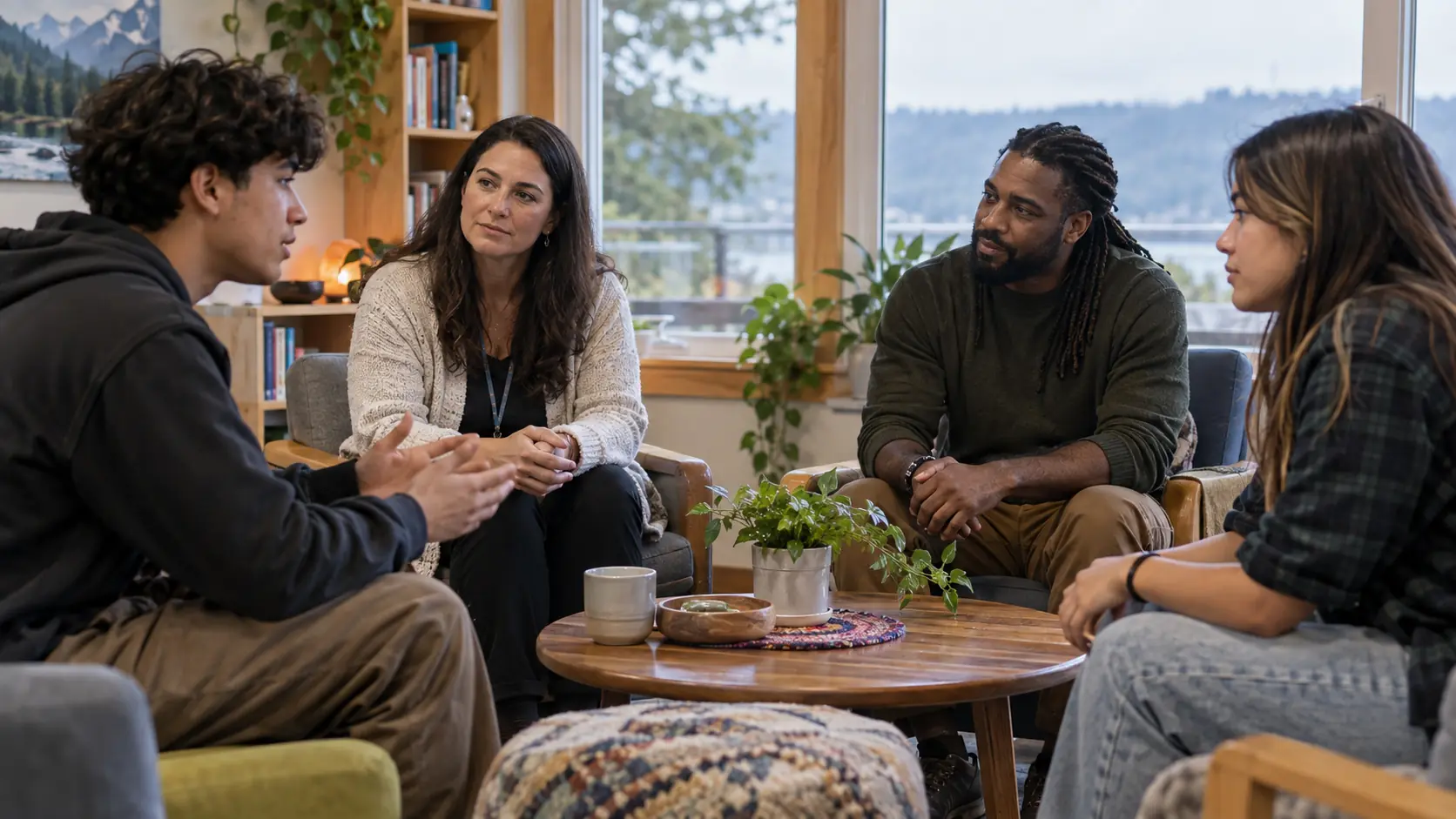
A young person speaks with three adults in an imagined community support meeting. AI-generated illustration; not a photograph of this project.
A young person affected by substance use may need a trusted adult and support that goes beyond the mentoring session. This OJJDP call connects those responsibilities. It funds mentoring for young people using substances, at risk of using them or living with substance use in their close family.
Local awards can reach $650,000; statewide or regional awards can reach $2 million. Applicants must have delivered structured youth mentoring for three uninterrupted years and must still deliver it directly. A formal agreement with a licensed or accredited treatment organization is required. An organization whose primary function is treatment cannot lead this mentoring application. Different categories have additional reach and applicant tests.
Grants.gov receives the first form by November 16 at 11:59 p.m. Eastern; JustGrants receives the full application by November 23 at 8:59 p.m. Eastern. The instructed October 30 latest start for SAM registration has passed. Verify active accounts now. A useful partnership needs both the working relationship and the documents that establish it.
Before you start
Category-specific US government, education and nonprofit applicants. Both categories require three uninterrupted years of structured youth mentoring and current direct mentoring delivery. A licensed/accredited treatment partner MOU is required; treatment-primary organizations cannot lead. National-organization status requires active affiliates or subrecipients in at least 45 states predating the notice; other local and statewide categories have their own tests.
The finer details
SAM registration/renewal latest advised start October 30 has passed. This is account-preparation advice, not an alternative final deadline. Mentoring lead needs three uninterrupted years, current delivery and a licensed/accredited treatment partner MOU.
United States; category-specific reach requirements
Official sources checked November 3, 2026; stated qualifications retained.
The Opioid Affected Youth Initiative offers up to $750,000 for coordinated prevention, intervention and treatment, with two November filing stages.
US Department of Justice, Office of Juvenile Justice and Delinquency Prevention · OJJDP FY2026 Opioid Affected Youth Initiative
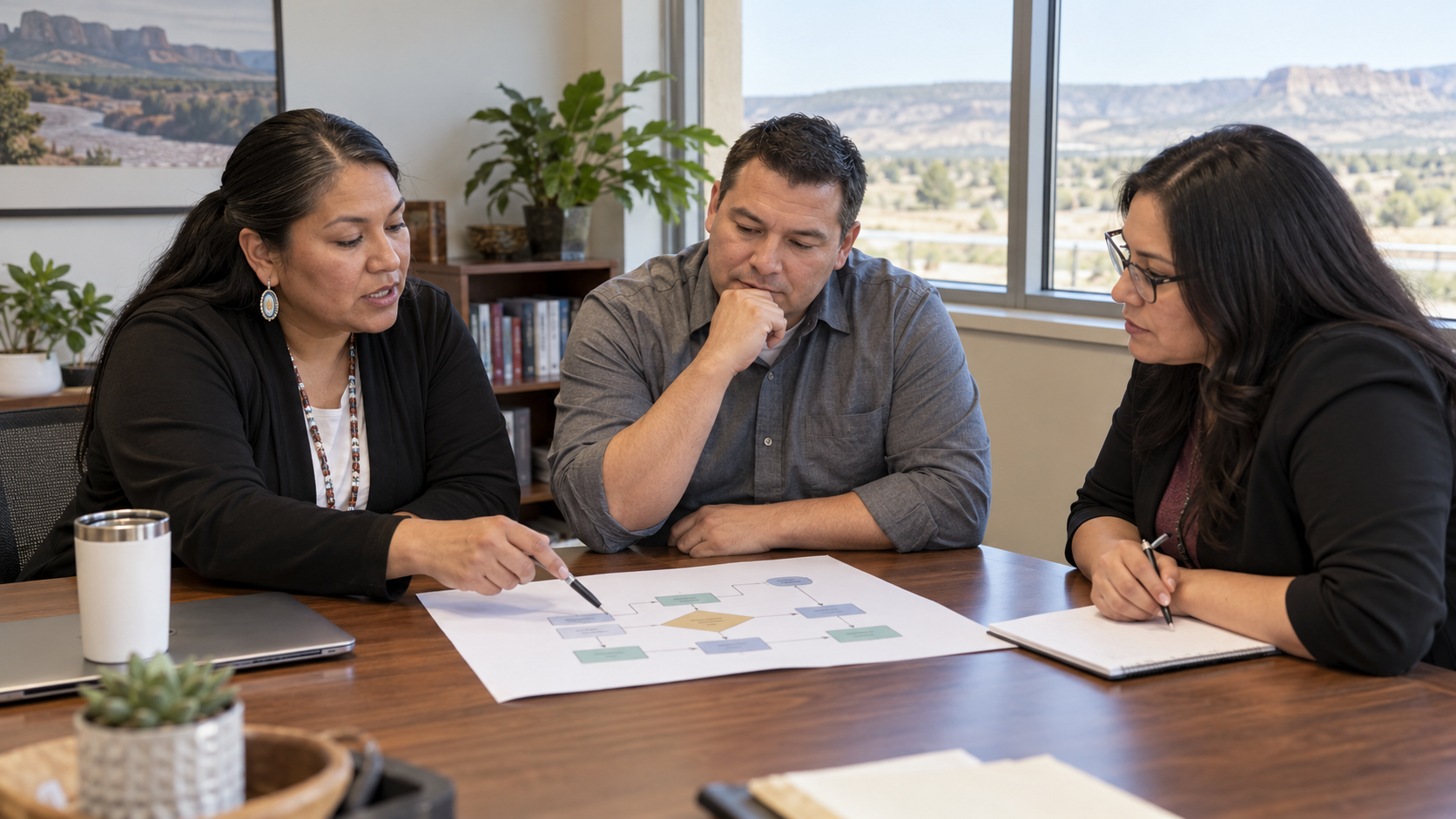
Community-service colleagues review a coordinated plan in an imagined meeting. AI-generated illustration; not a photograph of this project.
Substance use can pull a child’s school, family, health services and justice system into a problem without giving them a shared response. OJJDP’s Opioid Affected Youth Initiative asks communities to connect that work. The purpose includes reducing violent crime and overdose deaths while supporting affected children, young people and families.
The agency anticipates twelve awards of up to $750,000 over thirty-six months, within an $8.92 million funding pool. Listed state, local and Tribal governments and nonprofits may apply. Higher education institutions do not qualify through the nonprofit category. No match is required. A partnership has one applying organization; the others receive funding through that lead for their parts of the work. The SF-424 must reach Grants.gov by November 16 at 11:59 p.m. Eastern, followed by the full JustGrants application on November 23 at 8:59 p.m. Eastern. The instructed latest start for SAM registration was October 30. Check account status before assuming the later application date leaves all the preparation still available.
Before you start
Listed US state, county, city/township and federally recognized Tribal governments, other units of local government, and nonprofits with or without 501(c)(3) status other than higher education institutions. One applicant leads; other project partners receive subawards. No required match.
The finer details
October 30 latest advised start for SAM registration/renewal has passed. Check active accounts; the notice does not make that advisory start a separate application deadline. One applicant, partners as subrecipients.
United States
Official sources checked November 3, 2026; stated qualifications retained.
OJJDP offers up to $815,000 to support children exposed to violence, with a required planning team and a November 16 first-stage deadline.
US Department of Justice, Office of Juvenile Justice and Delinquency Prevention · OJJDP FY2026 Strategies To Support Children Exposed to Violence
A multidisciplinary team reviews plans and documents in an imagined working session. AI-generated illustration; not a photograph of this project.
Children exposed to violence can meet services and still fall between them. This OJJDP call asks communities to build a coordinated response, addressing victimization, service gaps and the risk of further harm. The work combines support for children and families with strategies to reduce juvenile violent crime.
Awards can reach $815,000 over thirty-six months. Nine awards are anticipated within a $7.335 million pool. Listed government, education, nonprofit and Tribal applicants may qualify, with no required match. A multidisciplinary planning team is required, and an application attachment must explain its structure. The team may already exist or form for this project; it must remain involved throughout delivery.
Submit the first form through Grants.gov by November 16 at 11:59 p.m. Eastern and the full JustGrants application by November 23 at 8:59 p.m. Eastern. The notice’s latest instructed start for SAM registration, October 30, has passed. One partner applies. The others need clear responsibilities, rather than a place only in the closing acknowledgments.
Before you start
Listed US state, county, city/township, special-district and Tribal governments; independent school districts and public/private higher education institutions; nonprofits with or without 501(c)(3) status; other local-government and Tribal organizations. A multidisciplinary planning team and attachment are required. No match.
The finer details
October 30 latest advised SAM start is passed. Required multidisciplinary planning team and Planning Team attachment. Keep the two submission stages distinct.
United States
Official sources checked November 3, 2026; stated qualifications retained.
Source check dates vary by story. Use the complete official notices to check the first step, eligibility and current terms before deciding to apply or bid.
THE ARKUS SIGNAL / FUNDINGTHE OPPORTUNITIES / 06
OPEN / Projects improving health in the United States
The evidence needs somewhere to work.
1 min read ·
Health Solutions Science in Action seeks proven approaches put to use beyond a pilot, with initial proposals due November 18 at 3 p.m. Eastern.
Pathways for Health Research Collective; centralized intake by Doris Duke Foundation · Demonstrating Health Solutions Science in Action
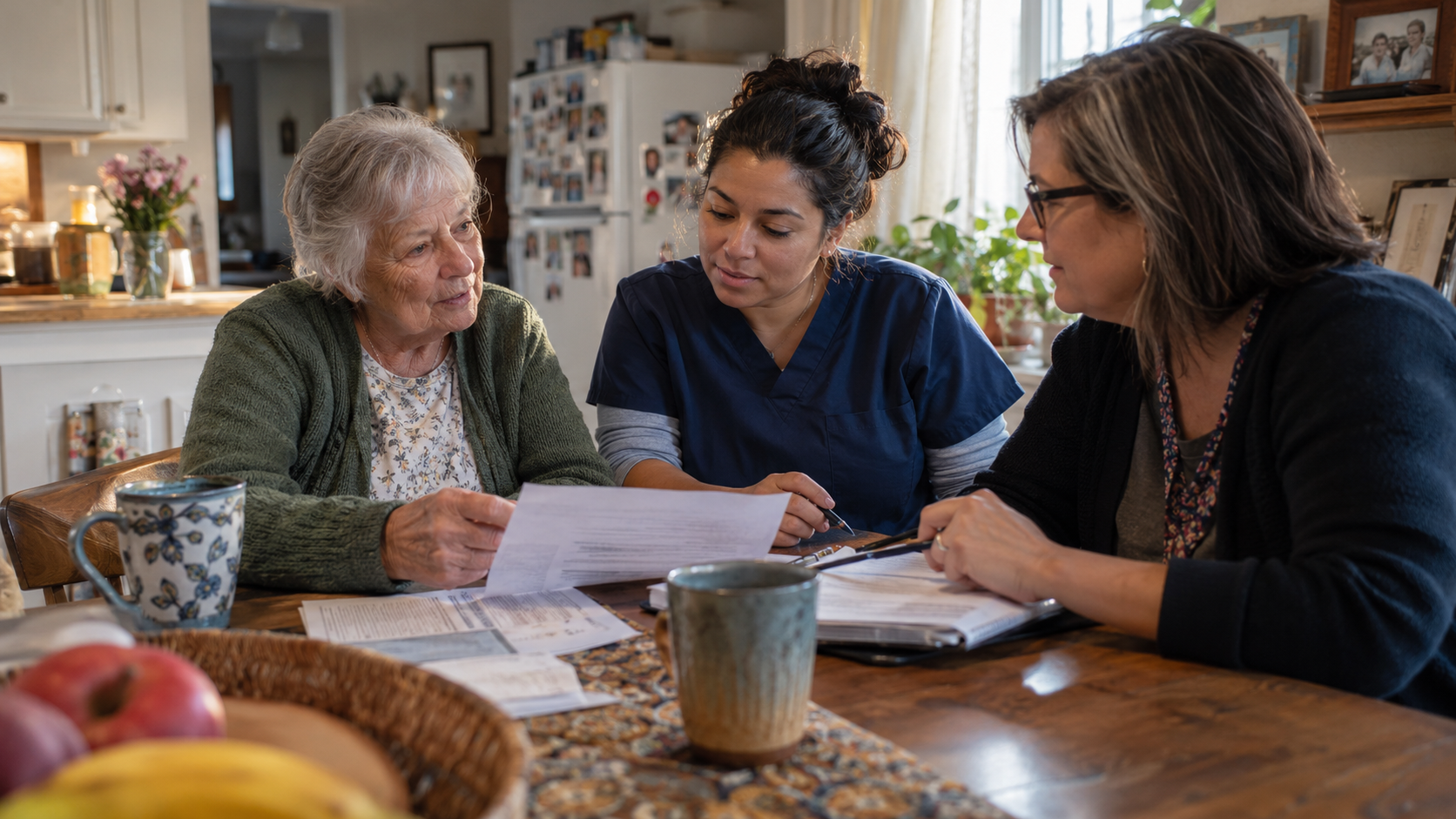
An older adult, health professional and colleague discuss care in an imagined home visit. AI-generated illustration; not a photograph of this project.
A finding can be well established and still wait outside everyday care. This health-funding collaboration wants teams to put existing evidence to work at greater-than-pilot scale and measure what changes. It asks the people producing knowledge and the people using it to build the project together, rather than exchanging a report at the end.
Teams need a feasible three-year plan and meaningful partner contributions. No award range is published, and the grant is expected to complement other financial and in-kind resources. Qualifying nonprofit leads are encouraged; state universities are eligible. The detailed request restricts support for for-profit entities, so partners should settle their intended roles before treating participation as funding eligibility.
Pre-proposals close November 18 at 3 p.m. Eastern. They include a project video of no more than seven minutes. A straightforward recording is sufficient; the funders do not encourage professional production. Use that time to explain the health problem, the evidence and how the approach will improve outcomes in real settings.
Before you start
A qualifying lead organization and a project improving US health at greater-than-pilot scale using strong existing evidence. Qualifying 501(c)(3) leads are encouraged; state universities are eligible. Other entities may collaborate under the detailed rules. Support for for-profit entities is restricted. A feasible three-year plan and partner contributions are required.
The finer details
The initial proposal includes a project video no longer than seven minutes. A simple recording is sufficient. Existing rigorous evidence, meaningful health outcomes and partner contributions are essential; a new intervention’s first pilot does not qualify.
Projects improving health in the United States
Official sources checked November 3, 2026; stated qualifications retained.
OPEN / Cities worldwide with at least 50,000 residents, subject to legal and sanctions restrictions
The city has to want the solution.
1 min read ·
Cities Deliver offers $500,000 to $2 million for AI in public services, with a committed municipal partner and a November 29 first round.
The Rockefeller Foundation and OpenAI Foundation; managed by RF Catalytic Capital · Cities Deliver: AI Solutions for Public Services
City-service colleagues and residents discuss a service plan in an imagined civic workspace. AI-generated illustration; not a photograph of this project.
A service tool needs more than a technology team. It needs a city that wants to use it and residents with a problem. Cities Deliver funds that collaboration in public health, economic mobility, environmental resilience and civic engagement. Recent generative AI must do meaningful work.
Seed awards range from $500,000 to less than $1 million; scale awards range from $1 million to $2 million. Grants last twenty-four months, with half paid initially and half after a documented midterm milestone. Projects must serve a charitable purpose. Governments cannot apply directly. Eligible organizations need a city partner and must accept open licensing for grant-funded outputs.
Round one closes November 29 at 11:59 p.m. US Eastern Time. It needs an eligibility screen, a short solution video and a signed letter of intent from the city partner. Revised FAQs are promised for November 4. Check that update before finalizing the approach. Start with the city’s problem, rather than searching for one after the software is chosen.
Before you start
Global organizational call for eligible nonprofits, fiscal sponsors, universities, public benefit corporations and limited for-profits under detailed charitable-benefit conditions. Governments and individuals cannot lead. A qualifying municipal partner is mandatory. Comprehensive US sanctions and applicable law restrict eligibility. Cities must have at least 50,000 residents.
The finer details
Round one requires legal-status evidence, a short solution video and a signed city-partner letter of intent or equivalent from an official with authority over the service area. Open licensing applies to grant-funded software, models and documentation, with stated exceptions. Government cannot lead; commercial benefit must be incidental.
Cities worldwide with at least 50,000 residents, subject to legal and sanctions restrictions
The issuer promises revised FAQs on November 4 by 8 p.m. EST. This record reflects the website, current FAQ and governing terms checked November 3.
Official sources checked November 3, 2026; stated qualifications retained.
THE ARKUS SIGNAL / IDEAS & EXPERIMENTSBEYOND THE OPPORTUNITIES
What changes after the announcement?
A proposal describes the work. Its value appears in what people can do afterward.
An award announcement marks a change in someone’s plans. It does not yet show a change in anyone’s working day. Between those two moments sit the people who will use a service, maintain a tool or decide whether a promising result deserves another test. Their ordinary Tuesday is a useful place to begin.
Consider a hypothetical training project. Producing a course, getting people through it and helping them do something better are three different achievements. A contract may ask for one, several or all three. Describing them clearly helps a team understand the work before it offers to undertake it. The attractive photograph can wait a moment.
Research has a similar distinction. Showing that an idea is possible differs from showing that a tool performs reliably enough for its intended use. Neither task is inherently more worthwhile. They answer different questions, need different evidence and belong at different stages. A proposal becomes stronger when it names the question it can actually answer.
This is also a practical way to discuss collaboration. Instead of beginning with the length of the partner list, ask who understands the problem, who can carry out the work and who will live with the result. Those responsibilities need an agreed home. A shared ambition is valuable; it still needs someone to answer the next email.
Before committing to an application, write one plain sentence about the change the work should make. Then compare it with the issuer’s purpose, the available resources and the conditions on participation. Keep the gaps visible. A useful opportunity does not require an extravagant promise. It requires a credible connection between what is offered and what people need.
OFFICIAL NOTICEName the changeKeep terms with dates.
OFFICIAL NOTICEFind the evidenceKeep terms with dates.
OFFICIAL NOTICEAgree the rolesKeep terms with dates.
Turn CALL into TALK in three moves. Change exactly one letter at each move and keep the others in place. Each clue names the word you need. Choose a word for every rung, then reveal the ladder. This is wordplay, not an eligibility test.
Circle a word for each rung. Check that each neighboring pair changes exactly one letter. Solution: CALL → WALL → WALK → TALK. One letter changes in each neighboring pair.
Original wordplay. This game makes no eligibility judgment. Your choices stay in this browser.
THE ARKUS SIGNALTHE STRIP / THREE ORIGINAL VIEWPOINTS
Between the lines.
Three scenes, each sparked by an opportunity in this week’s editions.
THE ARKUS SIGNAL / LAST LOOKTHE PEOPLE BEHIND THE WORK
Two calls. Two different starting points.
WATCH THE STORY / 24 SECONDS
THE ARKUS SIGNALFUNDING / 04 NOV 2026
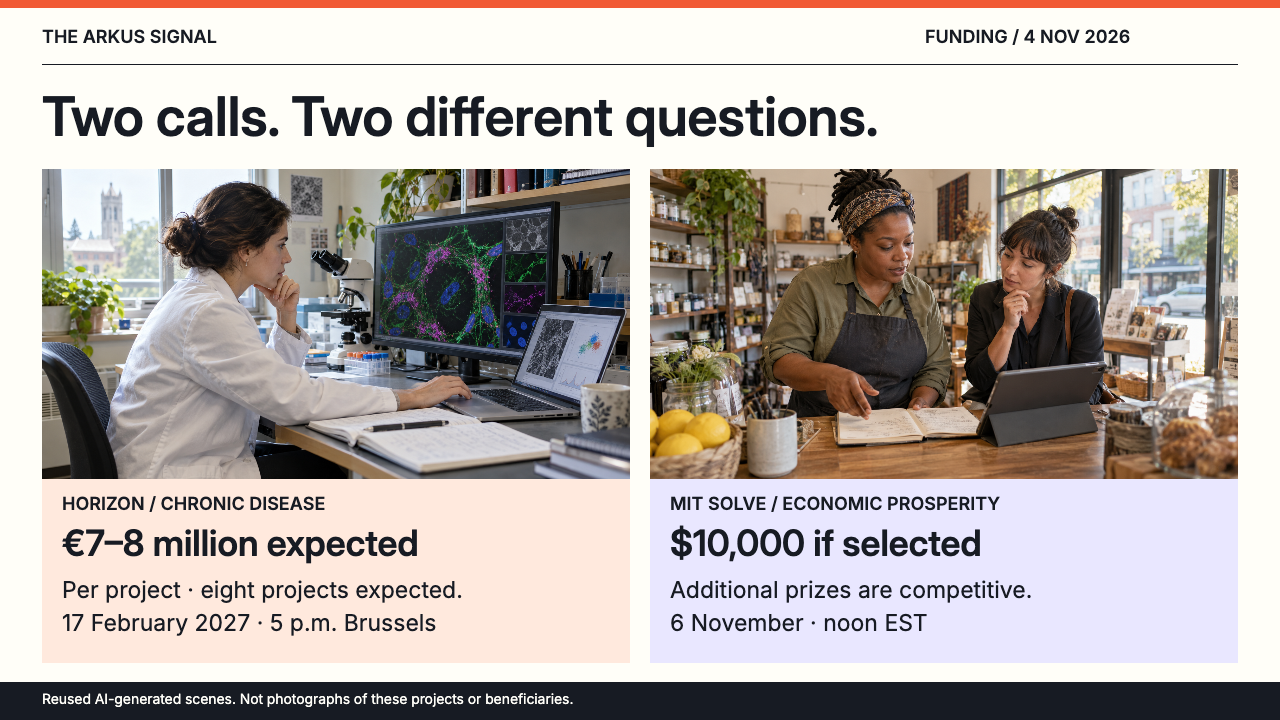
A European research consortium and a working solution for economic prosperity. Silent, with on-screen captions. Photographs are generated illustrations. The official notices control.
Chandler LewisFounder and Managing DirectorWalter BenadofPartner - Global Markets and InvestmentsNadia LerougeArkus Deputy Managing DirectorCloud (Yiyun) QiuPartner · Design and Innovation StrategyAarav GhaiResearch Analyst
Arkus Innovation Studios is a commercial venture studio and innovation advisory firm. We help founders, investors and enterprise teams examine an idea, understand the market around it and decide what deserves further work. Our purpose is to turn a broad ambition into a decision people can explain and a next step they can carry out.
That work can begin with a Startup Diagnostic for one venture or a Portfolio Diagnostic across several initiatives. An AI Workflow Sprint focuses on improving a specific way of working. The Innovation Compass supports a wider assessment of innovation choices. The right starting point depends on the question, the available evidence and the responsibilities the client wants Arkus to take on.
We work across commercial, research and public-interest settings, while keeping the organizations involved distinct. Arkus is the commercial studio. 360 Social Impact Studios is the nonprofit social-impact arm, and Enough Ventures is a separate capital platform. A connection between organizations does not make their legal roles or eligibility interchangeable.
To explore working together, bring the public opportunity, your idea or capabilities, and the role you have in mind. We can discuss the question, what needs to be demonstrated and whether a practical engagement makes sense. Any application, teaming arrangement or delivery commitment needs its own agreed responsibilities. Contact Nadia at nadia@arkusinnovationstudios.com to start the conversation.
An Arkus Innovation Studios publicationPeople & possibilities
The Arkus Signal
Grants and funding opportunities worth pursuing
FUNDING EDITION4 NOVEMBER 2026ISSUE 08 / PRINT EDITION
Grants & research funding
The idea has to reach the clinic.
A newly opened European health call expects €7 million to €8 million per project for interventions against four major groups of chronic disease.
A researcher examines scientific images beside a microscope in an imagined laboratory. AI-generated illustration; not a photograph of this project.
A treatment can look promising long before it changes a patient’s care. This Horizon Europe call asks research teams to develop innovative interventions for cardiovascular disease, diabetes, chronic respiratory disease or chronic kidney disease. The work should advance toward meaningful clinical use, with the evidence needed to support it.
Inside: ten funding stories, with checked official notices, useful repeat coverage and clear first steps. New features and newly issued calls are identified separately.
FOLLOW THE ROUTE
Two ways to put an idea to work.
Choose a route to see what its starting point requires.
European Commission / European Health and Digital Executive Agency
Build the right core.
A funded US organization is additional to the required three-country EU/associated consortium. The first stage is assessed blind.
An editorial comparison, not an issuer scoring formula.Read the story ↗
THE ARKUS SIGNAL / FUNDINGTHE OPPORTUNITIES / 02
OPEN / EU/associated-country core with eligible US entities
The idea has to reach the clinic.
1 min read ·
A newly opened European health call expects €7 million to €8 million per project for interventions against four major groups of chronic disease.
European Commission / European Health and Digital Executive Agency · HORIZON-HLTH-2027-02-DISEASE-01-two-stage: Innovative healthcare interventions for non-communicable diseases
A researcher examines scientific images beside a microscope in an imagined laboratory. AI-generated illustration; not a photograph of this project.
A treatment can look promising long before it changes a patient’s care. This Horizon Europe call asks research teams to develop innovative interventions for cardiovascular disease, diabetes, chronic respiratory disease or chronic kidney disease. The work should advance toward meaningful clinical use, with the evidence needed to support it.
The expected European contribution is €7 million to €8 million per project, within a €63.8 million topic budget. These are planning figures, not guaranteed awards. US organizations can receive funding, but they cannot supply the minimum European consortium: three independent beneficiaries from three EU or associated countries, including at least one EU member.
The window opened October 29. First-stage applications are due February 17, 2027 at 5 p.m. Brussels local time; the second stage follows September 16. First-stage assessment is blind, so organization names, logos and personnel must stay out of the specified proposal sections. The research needs an identity. That draft must leave it off the page.
Before you start
Legal entities including eligible US organizations may receive funding. The consortium must include at least three independent beneficiaries from three different EU or associated countries, including at least one EU member. A US entity is additional to that minimum. The abstract and Part B of the blind first-stage proposal must omit organization names, acronyms, logos and personnel.
The finer details
Register for a participant identification code. Blind first stage must omit names, acronyms, logos and personnel from the proposal abstract and Part B. The minimum consortium still needs three independent EU/associated beneficiaries from three countries, including one EU member.
International consortium with the required EU/associated-country core; US entities eligible for funding
HaDEA labels both stages CEST, while the governing work programme says Brussels local time. Calendars use Europe/Brussels, which is CET in February and CEST in September.
The live application portal returned an automated-fetch error. Open status and dates are confirmed by current HaDEA and the revised work programme. No blanket US coordination prohibition is asserted.
Official sources checked November 3, 2026; stated qualifications retained.
OPEN / Global, with separate geography tests for individual prizes
A working idea gets a short runway.
1 min read ·
MIT Solve’s economic prosperity challenge closes November 6 at noon Eastern, with $10,000 for every selected Solver and separate competitive prizes.
MIT Solve · 2027 Global Economic Prosperity Challenge
A small-business owner and adviser review records together in an imagined neighborhood shop. AI-generated illustration; not a photograph of this project.
An income shock, a poor connection to work or an unaffordable home can unsettle far more than a household budget. MIT Solve is looking for technology-based solutions that help people build financial resilience, find quality employment or reach safe, affordable housing. The technology can take many forms. The practical benefit needs to be clear.
Every selected Solver team receives a $10,000 grant and access to a nine-month support program. Additional prizes have their own subject and geography rules; none should be added to the guaranteed amount. A prototype can qualify, while a concept without a functioning prototype belongs outside this challenge’s eligible stages.
Applications close Friday, November 6 at noon Eastern Standard Time. That is lunchtime, with no evening left to rescue a late draft. Previous Solvers may return with a genuinely new solution. Explain the people involved, the evidence that the approach works and why this team can make it useful beyond its first setting.
Before you start
Technology-based solutions at prototype, pilot, growth or scale stage, with global participation. Concept-only entries are outside this economic-prosperity challenge. Previously selected Solvers must propose a genuinely new solution. Individual prizes add geography or subject tests.
The finer details
Technology-based solution at a qualifying stage. Concept-only entries are not accepted for this economic-prosperity challenge. Previously selected teams need a genuinely new solution.
Global, with separate geography tests for individual prizes
Official sources checked November 3, 2026; stated qualifications retained.
OPEN / United States and eligible foreign organizations
First, show the tool can work.
1 min read ·
NCI’s R61 call offers up to $150,000 a year in direct costs for early tests of new cancer-research technology, closing November 10.
National Cancer Institute · RFA-CA-27-001: Early-Stage Innovative Technology Development for Basic and Clinical Cancer Research
Researchers prepare samples and inspect scientific images in an imagined laboratory. AI-generated illustration; not a photograph of this project.
A new way to examine a cell or handle a biospecimen needs evidence that its basic promise is real. NCI’s early-stage technology call supports those first technical tests. The intended advance is the method or instrument itself, with a cancer-relevant use. A new biological question answered using familiar equipment does not satisfy that distinction.
The grant provides up to $150,000 a year in direct project costs for up to three years. Eligible applicants include universities, nonprofits, businesses and foreign organizations. Clinical trials are not permitted. Foreign applicants may apply directly, but foreign subawards and subcontracts are prohibited under this notice. A cross-border team therefore needs to read the funding structure as carefully as the research scope.
Applications close November 10 at 5 p.m. in the applying organization’s local time. NIH registrations must be complete before submission and can take six weeks or more. An existing account is useful only if it is still active. Check that foundation before building the final application around it.
Before you start
Listed higher education institutions, nonprofits with or without 501(c)(3) status, businesses, governments and foreign organizations may apply. No clinical trials. Foreign subawards/subcontracts are prohibited; direct foreign applicants and certain unfunded collaborations remain permitted under the notice.
The finer details
Complete active SAM.gov, Grants.gov and eRA Commons registrations before submission; these can take six weeks or more. No clinical trials. Foreign subawards/subcontracts are prohibited.
United States and eligible foreign organizations
The source states 5 p.m. in the applicant organization’s local time. Calendars remain all-day until the applying organization’s time zone is chosen.
Official sources checked November 3, 2026; stated qualifications retained.
OPEN / United States and eligible foreign organizations
One good result is the beginning.
1 min read ·
NCI’s R33 call backs rigorous validation of emerging cancer-research tools, with up to $300,000 a year in direct costs and a November 10 deadline.
National Cancer Institute · RFA-CA-27-002: Advanced Development and Validation of Emerging Technologies for Basic and Clinical Cancer Research
Two researchers examine a microscope image together in an imagined laboratory. AI-generated illustration; not a photograph of this project.
A prototype that works once has made a useful start. A research community needs to know whether the result can be repeated, trusted and used in a relevant setting. NCI’s advanced technology call addresses that next stretch: improving and validating an emerging tool after its major feasibility gaps have been overcome.
Applicants need supportive preliminary data and a rigorous technical validation plan. Up to $300,000 a year in direct costs is available for no more than three years. The technology must add meaningful cancer-research capabilities; applying an existing tool to a novel biological question is outside scope. Clinical trials are excluded. Eligible foreign organizations may apply, but foreign subawards and subcontracts are prohibited.
The full application is due November 10 at 5 p.m. in the applicant organization’s local time. Complete registrations beforehand and allow time to correct submission errors. This is a different maturity stage from the companion R61 call. Choose the stage the evidence supports, rather than the ceiling that makes the budget look more comfortable.
Before you start
Listed higher education institutions, nonprofits with or without 501(c)(3) status, businesses, governments and foreign organizations may apply. No clinical trials. Foreign subawards/subcontracts are prohibited; direct foreign applicants and certain unfunded collaborations remain permitted under the notice.
The finer details
Supportive preliminary data must show major feasibility gaps overcome. Active registrations before submission. No clinical trials or foreign subawards/subcontracts.
United States and eligible foreign organizations
Applicant-local 5 p.m. cannot be converted without the organization’s time zone; reminder is all-day.
Official sources checked November 3, 2026; stated qualifications retained.
A nonprofit planning team discusses a building model in an imagined project meeting. AI-generated illustration; not a photograph of this project.
Adding a program can mean hiring the person who will run it, buying equipment or creating room for more people. Murdock’s strategic grants support those different changes. Check before committing costs: staff or programs begun before the Trust’s site visit can be ineligible.
The minimum request is $100,000 and the project budget must reach $200,000. These are separate floors, not a universal matching formula. Equipment recipients must cover at least half the purchase cost; staff and program grants follow different rules. Applicants need qualifying status and three complete years of operating and financial history. Fiscally sponsored organizations are excluded.
The letter of inquiry is due November 11 at 5 p.m. Pacific. Complete the portal’s eligibility assessment first. A Northwest address does not override sector exclusions, including specified services for aging. Read the current guide against the project, then explain the durable change the grant would make possible.
Before you start
Qualifying 501(c)(3) public charities, Tribal or government bodies; three complete operating/financial years. Northwest base or over half the impact in-region. Fiscally sponsored applicants excluded; track and sector rules apply.
The finer details
Portal eligibility assessment precedes the letter of inquiry. Three complete operating/financial years; own qualifying status. Fiscally sponsored organizations excluded. Read sector exclusions and project-start restrictions.
Alaska, Idaho, Montana, Oregon and Washington, or qualifying majority Northwest impact
The guidelines mention British Columbia faith-based entities while also excluding non-US entities. This feature does not claim a general Canadian route.
Official sources checked November 3, 2026; stated qualifications retained.
OPEN / United States; category-specific reach requirements
The mentor needs a partner too.
1 min read ·
OJJDP’s youth mentoring call requires an established program and a formal treatment partnership, with the first filing due November 16.
US Department of Justice, Office of Juvenile Justice and Delinquency Prevention · OJJDP FY2026 Mentoring for Youth Impacted by Opioids and Other Substance Use
A young person speaks with three adults in an imagined community support meeting. AI-generated illustration; not a photograph of this project.
A young person affected by substance use may need a trusted adult and support that goes beyond the mentoring session. This OJJDP call connects those responsibilities. It funds mentoring for young people using substances, at risk of using them or living with substance use in their close family.
Local awards can reach $650,000; statewide or regional awards can reach $2 million. Applicants must have delivered structured youth mentoring for three uninterrupted years and must still deliver it directly. A formal agreement with a licensed or accredited treatment organization is required. An organization whose primary function is treatment cannot lead this mentoring application. Different categories have additional reach and applicant tests.
Grants.gov receives the first form by November 16 at 11:59 p.m. Eastern; JustGrants receives the full application by November 23 at 8:59 p.m. Eastern. The instructed October 30 latest start for SAM registration has passed. Verify active accounts now. A useful partnership needs both the working relationship and the documents that establish it.
Before you start
Category-specific US government, education and nonprofit applicants. Both categories require three uninterrupted years of structured youth mentoring and current direct mentoring delivery. A licensed/accredited treatment partner MOU is required; treatment-primary organizations cannot lead. National-organization status requires active affiliates or subrecipients in at least 45 states predating the notice; other local and statewide categories have their own tests.
The finer details
SAM registration/renewal latest advised start October 30 has passed. This is account-preparation advice, not an alternative final deadline. Mentoring lead needs three uninterrupted years, current delivery and a licensed/accredited treatment partner MOU.
United States; category-specific reach requirements
Official sources checked November 3, 2026; stated qualifications retained.
The Opioid Affected Youth Initiative offers up to $750,000 for coordinated prevention, intervention and treatment, with two November filing stages.
US Department of Justice, Office of Juvenile Justice and Delinquency Prevention · OJJDP FY2026 Opioid Affected Youth Initiative
Community-service colleagues review a coordinated plan in an imagined meeting. AI-generated illustration; not a photograph of this project.
Substance use can pull a child’s school, family, health services and justice system into a problem without giving them a shared response. OJJDP’s Opioid Affected Youth Initiative asks communities to connect that work. The purpose includes reducing violent crime and overdose deaths while supporting affected children, young people and families.
The agency anticipates twelve awards of up to $750,000 over thirty-six months, within an $8.92 million funding pool. Listed state, local and Tribal governments and nonprofits may apply. Higher education institutions do not qualify through the nonprofit category. No match is required. A partnership has one applying organization; the others receive funding through that lead for their parts of the work. The SF-424 must reach Grants.gov by November 16 at 11:59 p.m. Eastern, followed by the full JustGrants application on November 23 at 8:59 p.m. Eastern. The instructed latest start for SAM registration was October 30. Check account status before assuming the later application date leaves all the preparation still available.
Before you start
Listed US state, county, city/township and federally recognized Tribal governments, other units of local government, and nonprofits with or without 501(c)(3) status other than higher education institutions. One applicant leads; other project partners receive subawards. No required match.
The finer details
October 30 latest advised start for SAM registration/renewal has passed. Check active accounts; the notice does not make that advisory start a separate application deadline. One applicant, partners as subrecipients.
United States
Official sources checked November 3, 2026; stated qualifications retained.
OJJDP offers up to $815,000 to support children exposed to violence, with a required planning team and a November 16 first-stage deadline.
US Department of Justice, Office of Juvenile Justice and Delinquency Prevention · OJJDP FY2026 Strategies To Support Children Exposed to Violence
A multidisciplinary team reviews plans and documents in an imagined working session. AI-generated illustration; not a photograph of this project.
Children exposed to violence can meet services and still fall between them. This OJJDP call asks communities to build a coordinated response, addressing victimization, service gaps and the risk of further harm. The work combines support for children and families with strategies to reduce juvenile violent crime.
Awards can reach $815,000 over thirty-six months. Nine awards are anticipated within a $7.335 million pool. Listed government, education, nonprofit and Tribal applicants may qualify, with no required match. A multidisciplinary planning team is required, and an application attachment must explain its structure. The team may already exist or form for this project; it must remain involved throughout delivery.
Submit the first form through Grants.gov by November 16 at 11:59 p.m. Eastern and the full JustGrants application by November 23 at 8:59 p.m. Eastern. The notice’s latest instructed start for SAM registration, October 30, has passed. One partner applies. The others need clear responsibilities, rather than a place only in the closing acknowledgments.
Before you start
Listed US state, county, city/township, special-district and Tribal governments; independent school districts and public/private higher education institutions; nonprofits with or without 501(c)(3) status; other local-government and Tribal organizations. A multidisciplinary planning team and attachment are required. No match.
The finer details
October 30 latest advised SAM start is passed. Required multidisciplinary planning team and Planning Team attachment. Keep the two submission stages distinct.
United States
Official sources checked November 3, 2026; stated qualifications retained.
Source check dates vary by story. Use the complete official notices to check the first step, eligibility and current terms before deciding to apply or bid.
THE ARKUS SIGNAL / FUNDINGTHE OPPORTUNITIES / 06
OPEN / Projects improving health in the United States
The evidence needs somewhere to work.
1 min read ·
Health Solutions Science in Action seeks proven approaches put to use beyond a pilot, with initial proposals due November 18 at 3 p.m. Eastern.
Pathways for Health Research Collective; centralized intake by Doris Duke Foundation · Demonstrating Health Solutions Science in Action
An older adult, health professional and colleague discuss care in an imagined home visit. AI-generated illustration; not a photograph of this project.
A finding can be well established and still wait outside everyday care. This health-funding collaboration wants teams to put existing evidence to work beyond a pilot and measure what changes. The people producing knowledge and those using it must build the project together, rather than exchange a report at the end.
Teams need a feasible three-year plan and meaningful partner contributions. No award range is published; the grant complements other financial and in-kind resources. Qualifying nonprofit leads are encouraged, and state universities are eligible. The request restricts support for for-profit entities, so settle partner roles before assuming participation means funding eligibility.
Pre-proposals close November 18 at 3 p.m. Eastern, including a project video of no more than seven minutes. A straightforward recording is sufficient; professional production is not encouraged. Explain the health problem, the evidence and how the approach will improve outcomes in real settings.
Before you start
A qualifying lead organization and a project improving US health at greater-than-pilot scale using strong existing evidence. Qualifying 501(c)(3) leads are encouraged; state universities are eligible. Other entities may collaborate under the detailed rules. Support for for-profit entities is restricted. A feasible three-year plan and partner contributions are required.
The finer details
The initial proposal includes a project video no longer than seven minutes. A simple recording is sufficient. Existing rigorous evidence, meaningful health outcomes and partner contributions are essential; a new intervention’s first pilot does not qualify.
Projects improving health in the United States
Official sources checked November 3, 2026; stated qualifications retained.
OPEN / Cities worldwide with at least 50,000 residents, subject to legal and sanctions restrictions
The city has to want the solution.
1 min read ·
Cities Deliver offers $500,000 to $2 million for AI in public services, with a committed municipal partner and a November 29 first round.
The Rockefeller Foundation and OpenAI Foundation; managed by RF Catalytic Capital · Cities Deliver: AI Solutions for Public Services
City-service colleagues and residents discuss a service plan in an imagined civic workspace. AI-generated illustration; not a photograph of this project.
A service tool needs more than a technology team. It needs a willing city and residents with a problem. Cities Deliver supports public health, economic mobility, environmental resilience and civic engagement. Recent generative AI must do meaningful work.
Seed awards range from $500,000 to less than $1 million; scale awards range from $1 million to $2 million. Both last twenty-four months, with half paid initially and half after a documented midterm milestone. Projects must be charitable. Governments cannot apply directly. Eligible organizations need a city partner and must accept open licensing for grant-funded outputs.
Round one closes November 29 at 11:59 p.m. US Eastern Time. It needs an eligibility screen, a solution video of at most five minutes and a signed letter of intent from the city partner. Revised FAQs are promised for November 4. Read them before finalizing the approach. Start with the city’s problem rather than searching for one after choosing the software.
Before you start
Global organizational call for eligible nonprofits, fiscal sponsors, universities, public benefit corporations and limited for-profits under detailed charitable-benefit conditions. Governments and individuals cannot lead. A qualifying municipal partner is mandatory. Comprehensive US sanctions and applicable law restrict eligibility. Cities must have at least 50,000 residents.
The finer details
Round one requires legal-status evidence, a short solution video and a signed city-partner letter of intent or equivalent from an official with authority over the service area. Open licensing applies to grant-funded software, models and documentation, with stated exceptions. Government cannot lead; commercial benefit must be incidental.
Cities worldwide with at least 50,000 residents, subject to legal and sanctions restrictions
The issuer promises revised FAQs on November 4 by 8 p.m. EST. This record reflects the website, current FAQ and governing terms checked November 3.
Official sources checked November 3, 2026; stated qualifications retained.
THE ARKUS SIGNAL / IDEAS & EXPERIMENTSBEYOND THE OPPORTUNITIES
What changes after the announcement?
A proposal describes the work. Its value appears in what people can do afterward.
An award announcement marks a change in someone’s plans. It does not yet show a change in anyone’s working day. Between those two moments sit the people who will use a service, maintain a tool or decide whether a promising result deserves another test. Their ordinary Tuesday is a useful place to begin.
Consider a hypothetical training project. Producing a course, getting people through it and helping them do something better are three different achievements. A contract may ask for one, several or all three. Describing them clearly helps a team understand the work before it offers to undertake it. The attractive photograph can wait a moment.
Research has a similar distinction. Showing that an idea is possible differs from showing that a tool performs reliably enough for its intended use. Neither task is inherently more worthwhile. They answer different questions, need different evidence and belong at different stages. A proposal becomes stronger when it names the question it can actually answer.
This is also a practical way to discuss collaboration. Instead of beginning with the length of the partner list, ask who understands the problem, who can carry out the work and who will live with the result. Those responsibilities need an agreed home. A shared ambition is valuable; it still needs someone to answer the next email.
Before committing to an application, write one plain sentence about the change the work should make. Then compare it with the issuer’s purpose, the available resources and the conditions on participation. Keep the gaps visible. A useful opportunity does not require an extravagant promise. It requires a credible connection between what is offered and what people need.
OFFICIAL NOTICEName the changeKeep terms with dates.
OFFICIAL NOTICEFind the evidenceKeep terms with dates.
OFFICIAL NOTICEAgree the rolesKeep terms with dates.
Turn CALL into TALK in three moves. Change exactly one letter at each move and keep the others in place. Each clue names the word you need. Choose a word for every rung, then reveal the ladder. This is wordplay, not an eligibility test.
Circle a word for each rung. Check that each neighboring pair changes exactly one letter. Solution: CALL → WALL → WALK → TALK. One letter changes in each neighboring pair.
Original wordplay. This game makes no eligibility judgment.
THE ARKUS SIGNALTHE STRIP / THREE ORIGINAL VIEWPOINTS
Between the lines.
Three scenes, each sparked by an opportunity in this week’s editions.
THE ARKUS SIGNAL / LAST LOOKTHE PEOPLE BEHIND THE WORK
Two calls. Two different starting points.
WATCH THE STORY / 24 SECONDS
THE ARKUS SIGNALFUNDING / 04 NOV 2026
A European research consortium and a working solution for economic prosperity. Silent, with on-screen captions. Photographs are generated illustrations. The official notices control.
Chandler LewisFounder and Managing DirectorWalter BenadofPartner - Global Markets and InvestmentsNadia LerougeArkus Deputy Managing DirectorCloud (Yiyun) QiuPartner · Design and Innovation StrategyAarav GhaiResearch Analyst
Arkus Innovation Studios is a commercial venture studio and innovation advisory firm. We help founders, investors and enterprise teams examine an idea, understand the market around it and decide what deserves further work. Our purpose is to turn a broad ambition into a decision people can explain and a next step they can carry out.
That work can begin with a Startup Diagnostic for one venture or a Portfolio Diagnostic across several initiatives. An AI Workflow Sprint focuses on improving a specific way of working. The Innovation Compass supports a wider assessment of innovation choices. The right starting point depends on the question, the available evidence and the responsibilities the client wants Arkus to take on.
We work across commercial, research and public-interest settings, while keeping the organizations involved distinct. Arkus is the commercial studio. 360 Social Impact Studios is the nonprofit social-impact arm, and Enough Ventures is a separate capital platform. A connection between organizations does not make their legal roles or eligibility interchangeable.
To explore working together, bring the public opportunity, your idea or capabilities, and the role you have in mind. We can discuss the question, what needs to be demonstrated and whether a practical engagement makes sense. Any application, teaming arrangement or delivery commitment needs its own agreed responsibilities. Contact Nadia at nadia@arkusinnovationstudios.com to start the conversation.